



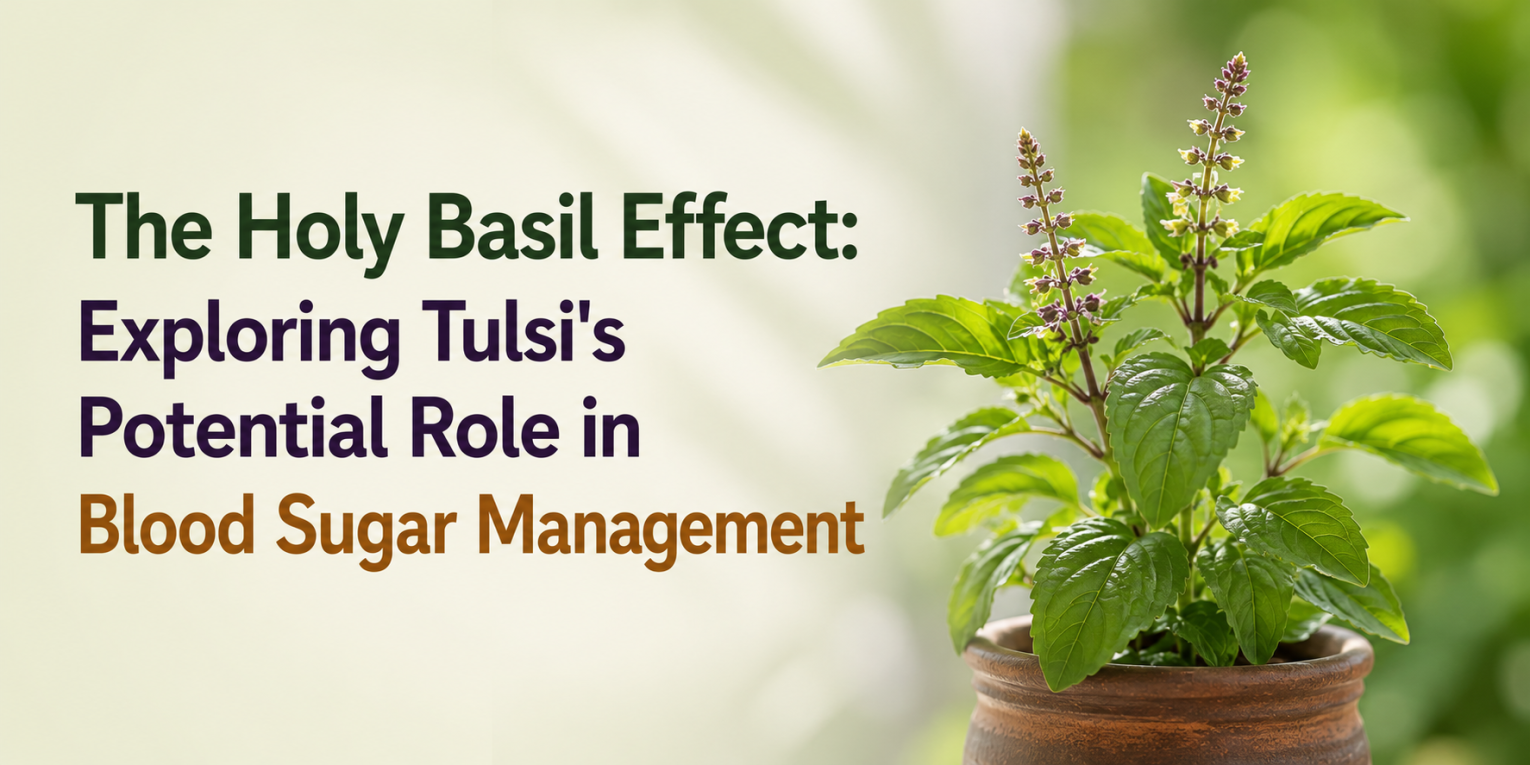
Tulsi has been growing in Indian courtyards for thousands of years, often treated more as a sacred plant than a medicinal one. But the two identities are not separate. The same plant that gets watered every morning for cultural reasons has also been documented across Ayurvedic texts and modern pharmacological research for its genuine therapeutic effects.
Among those effects, its influence on blood sugar regulation stands out. This guide looks specifically at Tulsi’s benefits for insulin and glucose control, and why this common kitchen-garden plant deserves a more prominent place in conversations about managing diabetes naturally.
The Nutritional and Medicinal Profile of Tulsi: Essential Oils and Antioxidants
Tulsi, Ocimum sanctum or Ocimum tenuiflorum, depending on the variety, has an unusually dense concentration of phytochemicals in its small, aromatic leaves.
- The basil medicinal properties that intrigue researchers include eugenol, ursolic acid, rosmarinic acid, and a cluster of antioxidant flavonoids that work together.
- Eugenol, the same compound responsible for Tulsi’s distinctive clove-like scent, shows consistent anti-inflammatory and glucose-lowering activity.
- Rosmarinic acid works at the cellular level to reduce oxidative stress in skeletal muscle, one of the underappreciated drivers of insulin resistance.
Taken together, these compounds make Tulsi leaves’ properties pharmacologically complex in ways that continue to surprise even experienced researchers.
| Bioactive Compound | Classification | Primary Metabolic Role |
| Eugenol | Phenylpropanoid | May reduce inflammation and support glucose metabolism |
| Ursolic Acid | Triterpenoid | May support insulin sensitivity (based mainly on experimental studies) |
| Rosmarinic Acid | Polyphenol | Antioxidant activity reduces oxidative stress |
| Orientin & Vicenin | Flavonoids | May help protect beta cells from oxidative stress (experimental evidence) |
| Ocimarin | Coumarin | Being investigated for potential anti-glycation effects |
| Methyl Chavicol | Volatile essential oil | Antimicrobial, anti-inflammatory support |
Raw Consumption Over Cooking
Most people are surprised to learn that how you consume Tulsi matters as much as whether you consume it.
- The volatile essential oils and heat-sensitive polyphenols that give Tulsi its metabolic power degrade rapidly under sustained heat.
- Prolonged heating may reduce some heat-sensitive compounds, although Tulsi tea still retains several beneficial plant constituents that contribute to the medicinal uses of the Tulsi plant.
.
- Commonly used methods include chewing fresh leaves, preparing a cold infusion, or using standardized extracts.
If fresh Tulsi is unavailable, look for supplements that specify the preparation method and the variety used.
Blood Glucose Regulation: How Tulsi Helps Lower Fasting and Post-Prandial Sugar Levels
Some clinical studies suggest that Tulsi may help support blood glucose management when combined with a healthy lifestyle and appropriate medical care.
- A fasting blood sugar test measures circulating glucose after a minimum eight-hour fast, usually taken first thing in the morning.
- It remains one of the most fundamental diabetes diagnostics precisely because fasting glucose reflects the liver’s reaction overnight, whether it is appropriately suppressing its own glucose production in response to residual insulin.
- Some studies suggest tulsi may influence fasting glucose partly by improving overnight insulin sensitivity and partly by reducing hepatic glucose output, the liver’s tendency to keep releasing glucose even when blood sugar is already elevated, a problem that worsens as insulin resistance progresses over the years, although more human research is needed.
Enhancing Pancreatic Function: Supporting Beta Cell Health and Insulin Secretion
Most conversations about blood sugar management focus on peripheral insulin sensitivity, how well muscles and fat cells respond to the insulin the pancreas makes. What gets far less attention is what is happening to the pancreas itself.
- In type 2 diabetes, progressive beta cell dysfunction drives the disease forward over years and decades. The benefits of eating Tulsi leaves become particularly interesting here because several of its active compounds appear to work directly on pancreatic tissue.
- Animal studies have suggested that ursolic acid may help protect pancreatic beta cells from damage. However, evidence of beta-cell regeneration in humans remains limited.
Interrupting the cycle at the source is exactly what a good metabolic intervention should aim to do.
Tulsi’s Anti-Glycation Effect and What It Means Long-Term
Glycation is the process by which glucose molecules attach themselves to proteins non-enzymatically, forming what researchers call advanced glycation end products, or AGEs.
- The AGEs accumulate in blood vessel walls, kidney tissue, the retina, and peripheral nerves, and they are directly responsible for the long-term complications that make poorly managed diabetes genuinely dangerous: neuropathy, nephropathy, retinopathy, and accelerated cardiovascular disease.
- Laboratory studies suggest certain Tulsi compounds may possess anti-glycation properties, though clinical evidence in humans remains limited.
- The medicinal qualities of basil, seen through this lens, go well beyond glucose-lowering; they reach into the actual pathological processes that shorten lives and diminish quality of life.
Managing Stress-Induced Diabetes: The Role of Tulsi as an Adaptogen for Cortisol Control
There is a conversation that rarely happens in diabetes clinics: how chronic stress directly raises blood sugar. Cortisol, the body’s primary stress hormone, triggers hepatic glucose output and reduces peripheral insulin sensitivity as part of the evolutionary fight-or-flight response.
- In chronically stressed modern life, cortisol stays persistently elevated, and blood sugar does, too. This is one of the clearest pathways through which sustained psychological stress accelerates pre-diabetes into type 2 diabetes without any change in diet or physical activity.
- Tulsi is classified in Ayurveda as a Rasayana, an herb that builds resilience and longevity, and in modern pharmacology as an adaptogen, meaning it modulates the stress response rather than simply suppressing it.
- Its capacity for natural cortisol control runs through the hypothalamic-pituitary-adrenal axis, the hormonal cascade that governs how aggressively the body reacts to daily stressors.
Building a Practical Routine to Control Cortisol Naturally
Some studies suggest Tulsi may help support the body’s response to stress through its adaptogenic properties and help control cortisol naturally. Better sleep independently improves insulin sensitivity, a compounding benefit that is easy to overlook.
- A practical protocol worth trying: one cup of fresh Tulsi tea in the morning before the cortisol curve peaks, and another in the late afternoon before the secondary rise. This timing strategy aligns Tulsi’s adaptogenic compounds with the body’s natural cortisol rhythm rather than fighting against it. Although there is no standardized therapeutic dosing regimen for blood sugar management.
- Some individuals may experience improvements in blood glucose markers, although results vary and further clinical research is needed.
Practical Uses for Diabetics: How to Properly Consume Tulsi for Maximum Bioavailability
Understanding the medicinal uses of the Tulsi plant in practical terms separates consistent results from vague impressions of benefit. The preparation method matters significantly, and this is where a lot of people quietly go wrong.
- Vigorous boiling destroys a meaningful fraction of eugenol and several heat-sensitive polyphenols, which is precisely why traditional preparations that gently steep Tulsi in hot water often outperform aggressive brewing methods.
- For diabetic management specifically, the four most bioavailable forms are fresh raw leaves chewed on an empty stomach, cold-infused Tulsi water prepared by soaking leaves overnight, standardised dry extract capsules listing ursolic acid or eugenol content, and fresh-pressed Tulsi juice consumed immediately after extraction.
Combining Tulsi with Complementary Approaches for Greater Effect
No single herb manages type 2 diabetes in isolation, and Tulsi works best as part of a broader, integrated lifestyle approach.
- Pairing Tulsi with fenugreek targets glucose absorption in the gut while Tulsi simultaneously improves cellular insulin sensitivity, two different mechanisms working together on the same problem.
- Adding cinnamon introduces insulin-mimicking compounds through a third, separate pathway. Some people combine these ingredients as part of traditional dietary practices, though robust clinical evidence supporting specific combinations is limited.
- Anyone already on oral hypoglycaemic agents, insulin therapy, or antihypertensive medications should discuss adding Tulsi to their routine with their physician, as the combined glucose-lowering effect may require dosage adjustments for safety.
Diabetes Test at Vijaya Diagnostics
Managing blood sugar well means tracking the right numbers consistently, not just reacting to symptoms after they appear. Vijaya Diagnostics brings trusted, accurate diagnostic testing to patients across India, covering everything from routine fasting blood sugar tests and HbA1c panels to comprehensive insulin resistance profiles and full metabolic health screenings.
With over 100 million lives touched, a legacy exceeding 40 years, a presence spanning 25+ cities across 6 states, and a team of more than 3,000 dedicated healthcare professionals, Vijaya Diagnostics stands among India’s most established names in clinical pathology. Regular testing does not just confirm a diagnosis; helping patients and healthcare professionals monitor changes in metabolic health over time.
FAQs
Is Tulsi safe for the kidneys?
For healthy individuals consuming Tulsi in normal dietary amounts, the herb is considered safe and may even offer mild antioxidant-based protection to kidney tissue, although human evidence remains limited. Those with existing chronic kidney disease or significantly reduced kidney function should consult a nephrologist before taking concentrated Tulsi supplements.
What happens if we eat Tulsi daily?
Regular daily consumption of four to seven fresh Tulsi leaves, particularly on an empty stomach, is a long-standing Ayurvedic practice with a growing body of clinical support behind it. Over weeks and months, consistent intake may support healthy blood glucose levels, better stress tolerance, enhanced immune function, and reduced systemic inflammation.
Does Tulsi affect blood pressure?
Eugenol in Tulsi exhibits mild vasodilatory properties, relaxing blood vessel walls and supporting healthy circulation. Some studies suggest Tulsi may support cardiovascular health and healthy blood pressure levels, though evidence remains limited. Those already taking prescribed antihypertensive medications should monitor their readings carefully when adding Tulsi to their daily routine.
Is Tulsi good for the liver and kidneys?
Tulsi’s hepatoprotective properties are among its better-studied benefits. Its antioxidants have been shown to reduce elevated liver enzyme levels and protect hepatocytes from chemical and oxidative damage. For kidney health, indirect benefits come through reduced systemic inflammation and oxidative burden.
Is Tulsi good for the lungs?
Yes. Tulsi has a well-established traditional basis and emerging scientific support for respiratory health. Its anti-inflammatory and antimicrobial properties may help provide respiratory comfort, however it should not replace prescribed asthma treatment. Warm Tulsi tea and Tulsi steam inhalation remain among the most widely used home-based respiratory remedies across South Asia.
Is Tulsi good for arthritis?
Eugenol and rosmarinic acid in Tulsi inhibit cyclooxygenase enzymes, the same molecular targets as common non-steroidal anti-inflammatory drugs. Its anti-inflammatory compounds are being studied for their potential role in supporting joint health.
Can Tulsi cure cough and cold?
Tulsi does not cure viral infections, but it may provide meaningful symptomatic and immunological support during illness. Its antimicrobial compounds help reduce pathogen burden, its anti-inflammatory activity soothes irritated throat tissue, and its immunomodulatory effects support faster overall recovery.
Does Tulsi increase immunity?
This is one of the most consistently supported benefits of eating Tulsi leaves. Research suggests Tulsi may support normal immune function through its immunomodulatory properties.
Does Tulsi relieve gas?
Yes. Tulsi’s carminative properties, its ability to reduce gas formation and ease intestinal spasms, make it a practical everyday digestive aid. Drinking warm Tulsi tea after heavy meals helps reduce post-meal bloating, eases cramping, and supports smoother digestion, particularly for individuals prone to irritable bowel symptoms or stress-triggered digestive discomfort.
Is Tulsi good for nerve pain?
Tulsi’s neuroprotective potential is an active area of ongoing research. Experimental studies suggest tulsi extract protects peripheral nerve tissue from oxidative damage, a finding directly relevant to diabetic peripheral neuropathy, where chronic hyperglycaemia damages the nerves in the feet and hands over time. Its anti-inflammatory compounds also contribute to mild analgesic effects that may help reduce the intensity of neuropathic discomfort.
Is Tulsi good for bacterial infection?
Tulsi extracts exhibit broad-spectrum antimicrobial activity against common pathogenic bacteria, including Staphylococcus aureus and Escherichia coli. Eugenol and methyl chavicol are the primary contributors to this activity. Laboratory studies have demonstrated antimicrobial activity, but Tulsi should not replace appropriate medical treatment for infections.
What are the two medicinal uses of Tulsi?
The most studied potential uses of Tulsi include blood sugar management and stress support.
Who should not eat Tulsi?
Pregnant or breastfeeding women should consult their healthcare provider before using Tulsi supplements, as safety data are limited. Individuals on blood-thinning medications such as warfarin should exercise caution due to Tulsi’s mild anticoagulant properties. Anyone scheduled for surgery should discontinue Tulsi supplementation at least two weeks beforehand.
Can Tulsi Interact with Medications?
Tulsi may influence blood glucose levels and blood pressure. People taking:
- Diabetes medications
- Insulin
- Blood pressure medications
- Blood thinners (anticoagulants)
should consult a healthcare professional before using Tulsi supplements regularly, as adjustments to medication may be required.
Disclaimer:
This article is intended for informational purposes only and does not replace professional medical advice. Tulsi may support overall health as part of a balanced lifestyle, but it is not a cure or treatment for diabetes or any other medical condition. Consult a healthcare professional before using Tulsi for therapeutic purposes.