



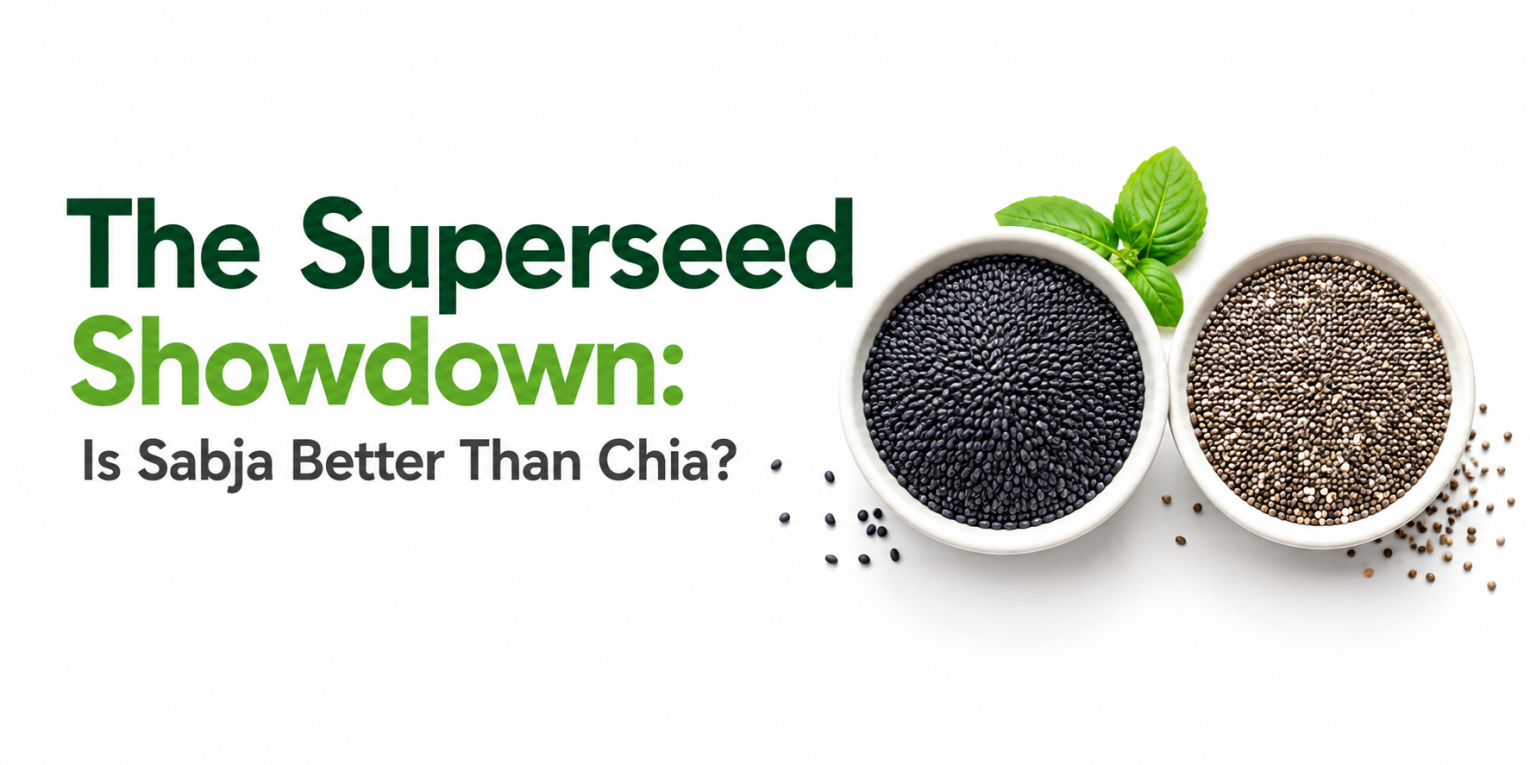
When it comes to nutrient-rich superseeds, the debate around Sabja vs Chia continues to grow. Both seeds swell when soaked, add texture to foods and drinks, and are often part of healthy eating plans. They look similar. But they have different nutritional profiles, culinary uses and potential health effects.
In traditional Ayurvedic practices, sabja seeds are often described as having cooling properties and are commonly consumed in beverages during hot weather.
A lot of people are looking at the benefits of chia seeds for their fibre, protein and omega-3s. Others are attracted by the cooling properties and digestive benefits of sabja. This guide compares the two seeds to help you understand their unique strengths and decide which might be better for your needs.
Nutritional Profiles: Distinguishing Sabja Seeds from Chia Seeds
Although sabja and chia seeds are often grouped together because of their similar appearance and ability to absorb water, they come from different plants and offer distinct nutritional benefits. Looking at their origins and nutrient content provides a clearer picture of how they compare.
The origin of chia can be traced to Central and South America, where chia seeds were valued by ancient civilisations as a nutrient-dense food source.
Sabja seeds, also known as basil seeds, originate from the sweet basil plant and have long been used in traditional Asian and Ayurvedic dietary practices, particularly in cooling beverages and desserts.
When examining the nutrition in chia seeds, they stand out for their high protein content, healthy fats, and omega-3 fatty acids. They also provide substantial amounts of calcium, magnesium, and iron.
The nutrition in sabja seeds is characterised by a high fibre content and lower calorie count. These seeds are especially valued for their ability to absorb water quickly and support digestive health.
Nutritional Comparison of Chia and Sabja Seeds
Values are approximate and may vary by source, growing conditions, and preparation method:
| Nutrient | Chia Seeds | Sabja Seeds (Basil Seeds) |
| Calories | 486 kcal | 233 kcal |
| Protein | 16.5 g | 4.8 g |
| Fat | 30.7 g | 4.0 g |
| Omega-3 Fatty Acids | 17.8 g | Moderate |
| Fibre | 34.4 g | 37.5 g |
| Calcium | 631 mg | 280 mg |
| Iron | 7.7 mg | 5.3 mg |
| Magnesium | 335 mg | 92 mg |
What Does This Mean?
- On a weight-for-weight basis chia seeds provide more protein, healthy fats, and omega-3 fatty acids.
- Sabja seeds contain slightly more fibre and fewer calories.
- Chia seeds are richer in key minerals such as calcium and magnesium.
- Both seeds can contribute to a healthy diet, but their nutritional strengths differ.
Understanding these differences can help you select the option that best matches your nutritional priorities and lifestyle needs.
Digestive Impact and Fibre Content: Comparing Mucilaginous Properties and Satiety
One of the main reasons both sabja and chia seeds are widely included in health-focused diets is their impressive fibre content and ability to form a gel-like coating when soaked in water. This natural gel, known as mucilage, plays an important role in digestion, hydration, and feelings of fullness after meals.
The chia seed properties include the ability to absorb several times their weight in liquid, creating a thick gel that slows digestion and helps food move more steadily through the digestive tract.
Similarly, the sabja seeds properties allow them to swell rapidly when soaked, producing a soft outer layer that can support hydration and contribute to smoother digestion.
How Mucilage Supports Digestive Health
When these seeds absorb water, the resulting gel may offer several digestive benefits:
- Adds bulk to stool, which can support regular bowel movements.
- Helps retain water in the digestive tract.
- May slow gastric emptying, promoting longer-lasting fullness.
- Supports overall gut health by increasing fibre intake.
Fibre and Satiety Comparison
| Feature | Chia Seeds | Sabja Seeds |
| Type of Fibre | Soluble and insoluble fibre | Primarily soluble fibre |
| Water Absorption | High | Very high and rapid |
| Feeling of Fullness | Long-lasting | Moderate to long-lasting |
| Digestive Support | Supports bowel regularity | Supports hydration and digestion |
The health properties of chia seeds are often linked to their combination of fibre, protein, and healthy fats. Together, these nutrients can help prolong satiety, making chia seeds a popular addition to breakfast bowls, smoothies, and snacks.
Sabja seeds, while lower in protein and fat, are exceptionally rich in fibre and absorb water much faster than chia seeds. This makes them a refreshing option in beverages and desserts, particularly during warmer months.
From a digestive perspective, both seeds can be beneficial when consumed with adequate fluids. While chia seeds may provide longer-lasting fullness, sabja seeds offer quick hydration and substantial fibre, making each a valuable addition to a balanced diet.
The Cooling Effect vs. Sustained Energy: Understanding the Ayurvedic and Modern Uses
Although sabja and chia seeds are often compared for their nutritional value, they have traditionally been used for very different purposes. Sabja seeds are widely recognised in Ayurvedic practices for their cooling nature, while chia seeds have gained popularity in modern nutrition for supporting sustained energy and satiety.
Sabja Seeds and Their Cooling Reputation
In traditional wellness systems, sabja seeds are commonly consumed during hot weather because they are believed to have a cooling effect on the body. Once soaked, they absorb water quickly and create a gel-like coating that contributes to hydration.
The effects of sabja seeds are often associated with improved hydration, digestive comfort, and a refreshing sensation when added to drinks and desserts.
Chia Seeds and Long-Lasting Energy
Unlike sabja seeds, chia seeds are frequently promoted in sports nutrition and healthy eating plans. Their combination of fibre, protein, and healthy fats allows nutrients to be released more gradually, helping people feel satisfied for longer periods.
Many people use chia seed water for energy as they provide fibre, protein, and healthy fats that may help support satiety and sustained nutrient release.
Traditional and Modern Uses Compared
| Aspect | Sabja Seeds | Chia Seeds |
| Traditional Use | Cooling and hydration support | Ancient energy food |
| Common Modern Use | Refreshing beverages and desserts | Smoothies, breakfast bowls, snacks |
| Key Benefit | Hydration and digestive comfort | Sustained energy and satiety |
Another reason chia seeds are popular in modern diets is their ability to promote fullness. The fibre-rich gel formed after soaking can help reduce hunger between meals.
For this reason, chia for weight loss is a topic frequently discussed in nutrition circles. However, there is no evidence that chia seeds alone cause significant weight loss without overall dietary and lifestyle changes
While sabja seeds are often chosen for their cooling and hydrating qualities, chia seeds are generally preferred when the goal is long-lasting energy and prolonged satiety. Both offer unique benefits and can fit comfortably into a balanced diet.
Omega-3 Fatty Acids and Antioxidants: Which Seed Offers Better Cardiovascular Support?
Heart health is influenced by many factors, including diet, physical activity, sleep, and stress management. Among nutrient-rich foods, both chia and sabja seeds have attracted attention because they contain compounds that may support cardiovascular wellness. However, they do so in slightly different ways.
Chia Seeds and Omega-3 Fatty Acids
One of the biggest nutritional advantages of chia seeds is their high concentration of alpha-linolenic acid (ALA), a plant-based omega-3 fatty acid. It is associated with cardiovascular health and may help support healthy triglyceride levels as part of a balanced diet.
This is one reason chia seeds for heart health are frequently discussed in nutrition research and wellness circles.
In addition to omega-3s, chia seeds provide fibre, protein, and minerals such as magnesium, all of which contribute to overall cardiovascular health.
Sabja Seeds and Their Protective Compounds
Sabja seeds may not contain omega-3 fatty acids in the same quantity as chia seeds, but they still offer nutritional value. They provide fibre, minerals, and naturally occurring plant compounds with antioxidant potential.
The benefits of sabja seeds include supporting digestive health and contributing nutrients that can complement a heart-conscious eating pattern.
Comparing Their Cardiovascular Strengths
| Feature | Chia Seeds | Sabja Seeds |
| Omega-3 Content | High | Moderate |
| Fibre Content | High | Very High |
| Antioxidant Compounds | Present | Present |
| Protein Content | Higher | Lower |
| Heart Health Potential | Strong nutritional support | Supportive nutritional contribution |
The advantage of sabja seeds lies in their high fibre content and lower calorie profile, which can make them a useful addition to a balanced diet aimed at overall wellness.
Which Seed Has the Edge?
From a cardiovascular perspective, chia seeds generally offer a stronger nutritional profile due to their significantly higher plant-based omega-3 (alpha-linolenic acid, ALA) content. However, sabja seeds still contribute fibre and beneficial plant compounds. Rather than viewing them as competitors, it may be more useful to see them as complementary foods that can both support heart health when included as part of a varied and nutritious diet.
Practical Applications in Cooking: Absorption Rates and Texture Differences in Daily Use
While sabja and chia seeds offer several nutritional benefits, their behaviour in the kitchen is where many of their differences become most noticeable. From soaking time to texture and recipe suitability, each seed brings unique qualities that can influence how it is used in everyday meals and beverages.
Absorption Rates: Which One Soaks Faster?
One of the biggest distinctions between these seeds is how quickly they absorb water.
| Feature | Chia Seeds | Sabja Seeds |
| Soaking Time | 30 minutes to several hours | 10–15 minutes |
| Water Absorption | High | Very rapid |
| Texture After Soaking | Thick and gel-like | Soft outer layer with a crunchy centre |
| Best Uses | Puddings, smoothies, breakfast bowls | Drinks, desserts and cooling beverages |
When prepared as chia water, the seeds gradually develop a thick, uniform gel that blends smoothly into beverages and recipes.
In contrast, sabja water forms much more quickly, with each seed retaining a distinct centre surrounded by a translucent coating.
Texture and Culinary Uses
Because of their thicker consistency, chia seeds are often used in recipes that require structure and body, such as:
- Chia puddings
- Smoothies
- Overnight oats
- Homemade energy snacks
Sabja seeds, on the other hand, are commonly added to:
- Fruit-based drinks
- Lemon beverages
- Milk-based desserts
- Cold refreshments
Everyday Convenience
The benefits of drinking chia seed water daily are often linked to increased fibre intake, hydration, and prolonged feelings of fullness, making it a popular morning beverage.
The benefits of drinking sabja water daily are frequently associated with hydration support and digestive comfort, especially when consumed as part of a balanced diet.
Which Is More Practical?
The answer largely depends on how you plan to use them. Chia seeds are versatile ingredients for meals that require a thicker texture and greater satiety. Sabja seeds are ideal when you need something quick to prepare and light to consume. Having both in your kitchen can offer flexibility, allowing you to choose the seed that best matches the recipe and occasion.
Conclusion
When comparing sabja and chia seeds, there is no single winner because each offers unique nutritional and functional advantages. Chia seeds stand out for their protein, omega-3 fatty acids, and long-lasting satiety, while sabja seeds are valued for their fibre content, rapid hydration, and cooling properties. Understanding the benefits of chia and sabja seeds can help you choose the option that best suits your dietary preferences, health goals, and daily routine. Both can be valuable additions to a balanced lifestyle.
FAQs
Who should not eat chia seeds every day?
People with allergies to chia seeds should avoid consuming them. Individuals taking blood-thinning medications or those with certain digestive conditions should consult a healthcare professional before making chia seeds a daily habit.
What are the common side effects of chia seeds?
Eating excessive amounts of chia seeds without enough water may cause bloating, gas, abdominal discomfort, or constipation. In rare cases, allergic reactions can occur.
Who cannot take sabja seeds?
People who are allergic to basil seeds should avoid sabja seeds. Those with swallowing difficulties or certain medical conditions should seek medical advice before consuming them regularly.
Can we mix both sabja and chia seeds?
Yes, sabja and chia seeds can be mixed together in drinks, smoothies, and desserts. Combining them allows you to benefit from the nutritional qualities and unique textures of both seeds.
Can I eat chia seeds on an empty stomach?
Yes, soaked chia seeds can be consumed on an empty stomach as part of a balanced diet. Their fibre content may help promote fullness and support digestive health.
What is the safest way to eat chia seeds?
The safest way to consume chia seeds is to soak them in water, milk, or another liquid before eating. This helps them expand properly and reduces the risk of discomfort or choking.
How long to soak chia seeds in milk?
Chia seeds should ideally be soaked in milk for at least 30 minutes to allow them to absorb liquid and develop a gel-like texture. For a thicker consistency, soaking them overnight in the refrigerator works best.
Both chia and sabja seeds should be consumed with adequate fluids. Dry seeds can expand significantly when exposed to liquid and may pose a choking hazard, particularly in individuals with swallowing difficulties. People with known seed allergies or specific medical conditions should consult a healthcare professional before significantly increasing their intake.
Can pregnant or breastfeeding women consume chia or sabja seeds?
Both chia and sabja seeds can generally be consumed in moderate amounts as part of a balanced diet. However, pregnant or breastfeeding women should consult their healthcare provider before significantly increasing their intake or using them as dietary supplements.
Disclaimer: This article is intended for educational purposes only and should not be considered medical advice. The nutritional properties of chia and sabja seeds may vary depending on the source, preparation method, and individual health status. While these seeds can be part of a balanced diet, they are not intended to diagnose, treat, cure, or prevent any disease. Consult a qualified healthcare professional before making significant dietary changes, especially if you have a medical condition or take prescription medications.