



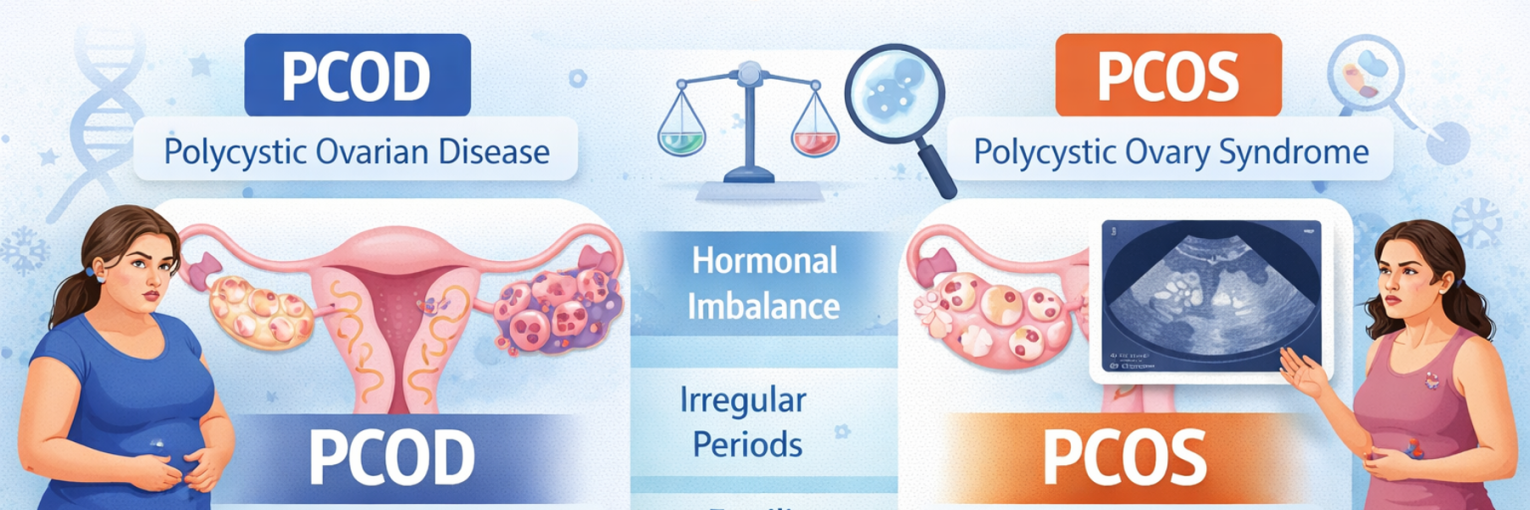
Polycystic ovary syndrome (PCOS) and Polycystic ovary Disease (PCOD) are commonly found hormonal disorders that affect women. It is particularly observed in their reproductive years.
PCOD is commonly used as a non-medical term—mostly in India—to describe polycystic ovaries or mild hormone imbalance.
PCOS, on the other hand, is the medically recognised endocrine-metabolic syndrome diagnosed using standard criteria (like the Rotterdam criteria).
In clinical practice, both terms may refer to similar findings, but PCOS describes the more specific and well-defined condition.
There is confusion regarding these conditions due to their common symptoms of irregular menstrual cycles, increased weight and multicystic ovaries. However, there are prominent differences between underlying causes, extent of severity and implications of health in the long-term. PCOD reason is found in excess insulin and androgen production, inflammation and heredity.
What’s the difference?
Confusion regarding PCOD vs PCOS emerges since both have polycystic ovaries in common. Polycystic ovaries happen when the ovaries have many semi-developed or immature eggs that are not released at regular intervals. Multiple symptoms overlap, like hair thinning, acne, infertility and weight gain.
Here, we are going to discuss reasons for PCOS and PCOD through proper examination of their symptoms, diagnosis and approaches to treatment and management. We are also going to understand key differences between them. It is important to understand these differences since they can contribute significantly to rapid diagnosis and proper management.
What is PCOD?
While we talk about women’s health conditions, you might come across the PCOD abbreviation, which directly refers to Polycystic Ovary Disease. PCOD is common in women, usually from the age of 12 to 45, during the reproductive age.
PCOD Causes:
Causes of PCOD can be attributed to:
- Stress
- Poor diet
- Physical inactivity
Individuals who have this condition in their families are also genetically more prone to PCOD.
PCOD reasons can be linked mainly to poor habits in lifestyle. Individuals with PCOD tend to have a disrupted balance of hormones, with an increase in androgens. This increase in androgens is caused by the buildup of eggs in the ovaries.
As a result, the regular development and release of eggs at the time of ovulation is also interfered with. Irregularities might be noticed in ovulation, or it might completely stop. This can lead to weight gain, excess body or facial hair, missed menstruation and acne.
In the context of long-term metabolic risks, PCOD is usually found to be less severe in nature. It can still have an impact on fertility and the entire wellbeing of a person when unmanaged.
PCOD Effects:
PCOD can result in:
- Insulin resistance
- Obesity
- Type-2 diabetes
- High cholesterol
- Increased chances of cardiovascular diseases
Individuals suffering from PCOD can also face difficulty in conceiving. Emotional and psychological effects are also common among women. Stress and anxiety can be prevalent due to appearance-related issues. Confidence can be reduced, along with the emergence of body image concerns.
What is PCOS?
PCOS can also be understood as a hormonal disorder that is specific to the reproductive years in a woman. PCOS is a much more serious and long-term condition that is related to major endocrine and metabolic disruptors. Women with PCOS do not have regular menstrual cycles and have unpredictable ovulation.
PCOS Causes:
PCOS causes are still unknown, but there are multiple factors that have a role to play. Let’s check out the most important reasons that lead to PCOS:
- Low-grade inflammation
- Insulin resistance
- Excessive levels of androgen and heredity.
Obesity is also a vital factor in impacting PCOS. This results in hormonal imbalance, forming multiple small cysts on the ovaries. Women often face troubles with conceiving and suffer from infertility.
Effects of PCOS:
Effects of PCOS are also related to the body’s inability to metabolise sugar properly. Body cells gradually become resistant to insulin, which makes sugar levels high in the blood. Too much insulin can also make androgen levels go high in the body. Symptoms associated with PCOS include:
- Irregularity in periods
- Skin tags
- Darkening of skin
- Severe acne
- Excess body and facial hair
- Male-pattern baldness
- Increased chances of endometrial hyperplasia and cancer
- High cholesterol and triglycerides
Mental health issues are also quite common in PCOS. Rates of depression, anxiety and mood disorders become high. Body image issues are also observed, due to hair growth, acne and obesity.
It is also possible that there are no symptoms, yet a woman has PCOS. This condition requires a more planned approach to management. These can involve changes in lifestyle habits, medical treatment and constant monitoring.
Key Differences Between PCOD and PCOS
We can discuss the main differences between PCOD and PCOS through parameters like causes, symptoms and impact on fertility. This enables us to understand differences between them, thus clarifying any confusion that exists due to similarities between PCOD vs PCOS.
| Parameters | PCOD | PCOS |
| Causes | PCOD may result from hormonal imbalance, genetics, and ovarian dysfunction. | PCOS causes are not known clearly, but lifestyle is not the only cause. Heredity has a greater impact. Hormonal imbalances are of a more severe nature. |
| Symptoms | Irregular periods, acne, weight gain and hair growth can be mildly affected but can be restored with lifestyle correction. | PCOS symptoms associated with irregular periods, acne, weight gain and hair growth are severely impacted and can become a huge concern. |
| Fertility Impact | Infertility is rarely caused. Minor medical help can be taken by women trying to conceive. | Effects of PCOS can greatly downgrade fertility. It can impact successful pregnancies through complications or miscarriages. |
Diagnosis of PCOD and PCOS
Effective diagnosis is important for PCOS and PCOD treatment. Early diagnosis can lead to the administration of treatment early. This increases the chances of recovering soon as well. We can also receive insights on how to cure PCOS and PCOD permanently.
PCOD: How it is diagnosed:
Diagnosis of PCOD involves stages of pelvic ultrasound, blood tests and a follow-up diagnosis at the clinic. A pelvic ultrasound might play a role in detecting:
- Appearance and size of the ovaries
- Presence of multiple small cysts or follicles
- Endometrial lining’s thickness
Primary blood tests help detect:
- Follicle-stimulating Hormone (FSH) and Luteinizing Hormone (LH)
- Excess male hormones like testosterone
- Pituitary issues through prolactin
- Insulin and glucose levels on fasting
- Thyroid functioning
Doctors might also recommend follow-up visits at regular intervals. This is meant for monitoring symptoms and assessing risks of fertility and insulin resistance.
PCOS: How it is diagnosed:
The same measures are adopted for PCOS as well; a pelvic exam can check reproductive organs for changes or growths of any kind. Blood levels of multiple hormones can also be measured successfully through blood tests. Intention for testing is mainly to find reasons for menstrual problems and androgen levels. Triglyceride and cholesterol levels are also checked after fasting.
Ultrasound might be useful in checking the thickness of the uterus and the appearance of the ovaries. A transducer is placed inside the vagina, and sound waves are translated into images. These images are used to confirm the presence of immature eggs that have failed to mature and ovulate.
Treatment & Management Options
We will now understand how to prevent PCOD and PCOS. Insights might help us in dealing with both these conditions effectively.
PCOS and PCOD treatment can involve multiple approaches. These are related to medications, diet, exercise, fertility support and long-term management.
Treatment of PCOS
Lifestyle changes are highly important when it comes to dealing with PCOS. Diet is an important aspect. It can include:
- Lean proteins
- Healthy fats
- Whole grains
- Fruits and vegetables rich in fibre
Moderate-level exercises can be done for managing body weight. Medications are capable of regulating menstrual cycles. These medications consist of:
- Combination pills for birth control
- Progestin therapy
A healthcare professional might suggest medications for ovulation. They also support fertility. These are:
- Gonadotropins
- Clomiphene
- Letrozole (Femara)
- Metformin
Laparoscopic Ovarian Drilling (LOD) can help reduce levels of male hormones. It can also stimulate ovulation in cases where medication is ineffective. In vitro fertilisation is also an option for women who are not responding to medication. Time during pregnancy needs to be closely monitored, or it might lead to increased risk of gestational diabetes and preeclampsia.
Long-term management helps in understanding the treatment for PCOD and PCOS. Monitoring metabolic health, managing stress and follow-ups with healthcare providers are crucial.
Treatment of PCOD
There are no permanent cures available for PCOD. It can be treated through combining lifestyle factors, medications and surgical intervention, rarely. Lifestyle factors can play a role in treating PCOD. A balanced diet is recommended for PCOD as well. Intake of processed foods and refined sugars should be reduced.
Exercises improve insulin sensitivity. Activities that can be considered are:
- Cardiovascular workouts
- Interval Training
- HIIT workouts
- Strength training
- Mind–body exercises like pilates and yoga
Hormone-regulating birth control pills are a part of the medication. These can decrease symptoms like excess hair growth and acne. Metformin can be used to stimulate ovulation. Fertility support consists of using drugs that induce ovulation.
Management in the long-term and monitoring can be ensured through:
- Monitoring cycles regularly
- Regular checking for metabolic health
- Supporting mental health
Stress needs to be managed through yoga, sufficient sleep and meditation. Counselling can also help with emotional well-being in case of severe anxiety or stress.
Conclusion
PCOS and PCOD have many similarities, but they are distinct in nature. Understanding their differences can help in guiding treatment and care in the long term. PCOD is usually a milder condition that can be managed through correcting lifestyle habits. PCOS is more complicated in nature and requires multi-step management in the long term. Diagnosis in the early days and proper care are vital for improving the quality of life of women with these conditions.
FAQs
1. Are PCOD and PCOS the same?
No, PCOD and PCOS are not the same. PCOD is caused when the ovaries produce immature eggs. This leads to hormonal imbalance and polycystic ovaries. PCOD is relatively milder and more common than PCOS. PCOS is a complete syndrome that affects metabolic, hormonal and reproductive health. It involves elevated androgens, irregular ovulation, insulin resistance and long-term complications like type-2 diabetes.
2. Which is more serious: PCOD or PCOS?
PCOS is relatively more serious than PCOD. PCOD mainly consists of enlarged ovaries that have immature eggs. PCOS is a more complicated condition related to deteriorating hormonal-metabolic health. Symptoms can be observed in irregular cycles, insulin resistance, obesity and infertility. PCOD is milder and more temporary in general. PCOS is highly complex and requires long-term care.
3. Can women with PCOD or PCOS get pregnant?
Yes, women with PCOD and PCOS can get pregnant. However, women with PCOS can make conceiving highly challenging. Hormonal imbalance, resulting in irregular ovulation and fertility, makes pregnancy a concern. Introducing changes in lifestyle, along with medications, can improve fertility. PCOD is treated sooner when lifestyle is well managed, but PCOS requires more treatment in the long term.
4. What are the main symptoms of PCOD and PCOS?
The main symptoms associated with PCOD are weight gain, irregular periods, and multicystic ovaries. These are also accompanied by a hormonal imbalance. PCOS contains more severe symptoms, such as acne, absent or irregular periods and excessive body hair. Metabolic issues like insulin resistance are also present, along with hair thinning and obesity.
5. How are PCOD and PCOS treated?
Treatment of PCOS and PCOD requires concentration on lifestyle factors. Maintaining a healthy diet in case of PCOD is crucial. It can manage weight and balance hormones. Treatment of PCOS requires more steps, accompanied by lifestyle factors. These include medications, like oral contraceptives, metformin and other fertility drugs. Advanced cases might require laparoscopic ovarian drilling and surgery.
6. Can diet and exercise cure PCOD or PCOS?
Diet and exercise are not proper cures for PCOD and PCOS. However, they can be viewed as prominent first-line treatments. Managing weight, eating a balanced diet with a low glycemic index, and consistent exercise are vital. These play a role in improving insulin sensitivity and the regulation of menstrual cycles. A decrease in symptoms like hair growth and acne is also observed. PCOD can be managed through these lifestyle changes, but PCOS requires medications.