



Facing any medical test can feel daunting, especially when it involves the possibility of cancerous cell growth. The FNAC test needle aims to replace a large part of that fear with clarity. The FNAC test offers doctors and patients a fast, reliable glimpse into what a swelling truly represents – without major surgery, extended hospital stays, or long recovery periods.
For patients, the FNAC lab test offers peace of mind. Minutes after the procedure, they walk out, resume normal life, and receive accurate answers within days rather than weeks – all at a competitive FNAC test price.
For clinicians, it delivers reliable information swiftly enough to change outcomes. For the healthcare system, it balances cost, efficiency, and precision.
What is the FNAC Test?
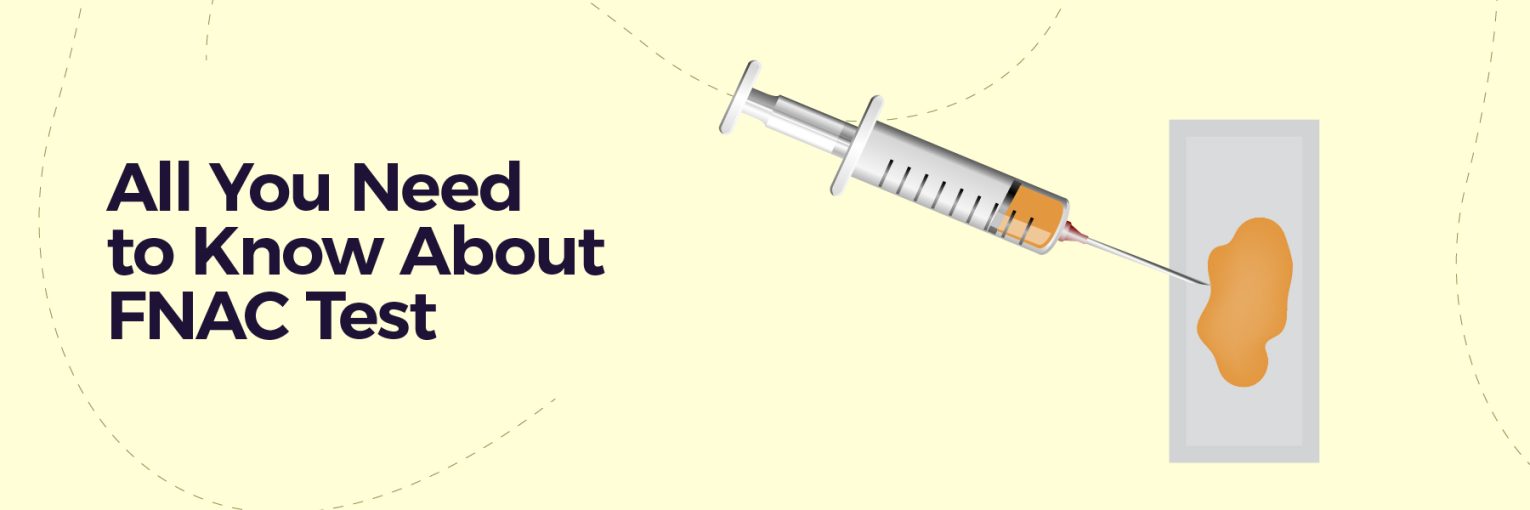
Let’s begin discussing the meaning of the FNAC test. It is a minimally invasive diagnostic procedure that retrieves a few representative cells from a nodule, cyst, or mass. The clinician attaches an ultra-thin needle to a small syringe and guides it into the lump.
After that, gentle suction is applied. Microscopic examination of the extracted cells then reveals whether they are healthy, inflamed, or malignant. Several features make FNAC stand out:
- Accessibility: The FNAC test is usually performed in an outpatient clinic. In many cases, patients return to daily activities within minutes.
- Versatility: FNAC can sample superficial lumps, such as thyroid nodules, as well as deeper lesions when paired with ultrasound or CT guidance.
- Speed: Many laboratories release preliminary findings within 24–48 hours, shortening the anxious wait that accompanies more invasive biopsies.
- Safety: Complication rates remain low because the puncture site is small, and the bleeding risk is minimal.
In practical terms, the FNAC test procedure offers a bridge between initial clinical suspicion and comprehensive treatment planning. When physicians suspect a particular diagnosis (perhaps breast carcinoma or granulomatous infection), they request FNAC to confirm or refute the hunch promptly.
FNAC Test Purpose
Doctors order FNAC whenever they need microscopic evidence to decide the next clinical step. That need often falls into three broad categories. The FNAC test purpose is as follows:
● Detecting malignancy
Early confirmation of cancer allows swifter surgical scheduling, timely chemotherapy, or targeted radiotherapy. Acting sooner frequently leads to better outcomes.
● Diagnosing benign but significant conditions
Enlarged lymph nodes may stem from tuberculosis in one patient, reactive hyperplasia in another, or lymphoma in a third. The FNAC test needle clarifies the difference, so individuals receive antibiotics, simple monitoring, or oncologic care as appropriate.
● Monitoring disease evolution
Patients in remission sometimes notice fresh nodules. A repeat FNAC test for neck or other parts quickly distinguishes scar tissue from recurrence, sparing unnecessary procedures when no active disease is present.
FNAC Test Uses
● Breast Lump Sorting
A breast lump can stem from a harmless cyst, a fibrous growth, or an early cancer. The FNAC test procedure draws a few cells through a thin needle and shows within days whether surgery, medicine, or simple monitoring is needed, sparing many women from larger procedures when the lump is benign.
● Thyroid Nodule Clarity
Modern scans often detect tiny thyroid nodules that cause no symptoms. The FNAC test process reveals if the nodule is just a colloid goitre, an inflammatory change, or a malignant lesion such as papillary carcinoma. The answer guides endocrinologists to either watch the gland, prescribe hormone tablets, or schedule a precise operation.
● Enlarged Lymph-Node Diagnosis
Swollen nodes in the neck, armpit, or groin may signal infection, lymphoma, tuberculosis, or spread of another cancer. By sampling the node on the clinic chair, the FNAC test quickly pinpoints the cause, allowing physicians to choose antibiotics, immunotherapy, or oncologic care without delay.
● Salivary-Gland Lump Distinction
Parotid and submandibular swellings look alike on the surface, yet range from simple inflammation to aggressive tumours. FNAC provides a microscopic signature that shows whether a conservative approach or an early, carefully planned surgery will best protect facial nerves and long-term function.
● Cyst And Abscess Evaluation
Complex cysts in the breast, liver, kidney, or soft tissue sometimes contain blood, pus, or tumour cells. A fine-needle tap both drains the fluid for comfort and sends a sample for study, telling the team if antibiotics, further drainage, or definitive removal is the right step.
● Deep-Seated Mass Investigation
Guided by ultrasound or CT, FNAC reaches lesions in the lung, pancreas, or retroperitoneum that once required open biopsy. Safe sampling of these hidden areas speeds up staging, shortens hospital stays, and lets oncologists plan evidence-based treatment sooner. But remember that FNAC test charges might be more expensive when it’s image-guided.
● Body-Fluid Cytology
When fluid collects around the lungs or abdomen, FNAC determines if infection, heart failure, or hidden cancer is responsible. Knowing the answer influences drug choice, drainage frequency, and overall prognosis.
● Treatment Progress Check
During chemotherapy or radiotherapy, a repeat FNAC can show whether malignant cells are shrinking or persisting, enabling timely adjustments before a visible change appears on scans.
In all these scenarios, FNAC’s blend of safety and accuracy turns uncertainty into clear, patient-centred action. The FNAC report time is also quite fast.
What is the FNAC Test Procedure?
Knowing each step can replace uncertainty with confidence.
1. Clinical Briefing
The physician explains why the test is needed, outlines its benefits and limitations, and secures written consent. Patients generally keep taking their usual medication unless they use strong blood thinners, in which case, a temporary adjustment may be advised.
2. Positioning and Skin Preparation
The examiner positions the patient (lying down, sitting, or sometimes semi-reclined) to expose the lump comfortably. A broad wipe of antiseptic solution eliminates surface bacteria, lowering infection risk.
3. Optional Local Anaesthetic
Many doctors administer a tiny injection of lignocaine or a similar agent. Although the fine needle hurts less than most blood draws, numbing the skin provides extra reassurance, especially for anxious patients or those with very sensitive areas.
4. Imaging Guidance When Required
Deep lumps often hide beneath layers of muscle or fat. Real-time ultrasound shows the needle path on a monitor, letting the physician steer around blood vessels and anchor points until the tip reaches the precise target.
5. Needle Insertion And Aspiration
With gentle, steady pressure, the clinician introduces the needle into the lesion. Pulling back the syringe plunger creates a vacuum that sucks cellular fragments up the bore. To maximise sample yield, the operator may make two or three quick in-and-out passes, redirecting slightly to harvest cells from different parts of the mass.
6. Sample Preparation
Immediately after withdrawal, the operator expels the aspirated material onto glass slides. A swift smear, fixation in alcohol or spray, and a few stains highlight nuclear details that help pathologists read the story etched inside each cell.
7. Post-Procedure Care
Pressure with a small piece of gauze prevents oozing. An adhesive strip or ice pack can minimize bruising, but elaborate dressings are unnecessary.
8. Turnaround Time
Many laboratories issue a preliminary cytology report within one working day and a final report in two. Special stains or molecular tests to identify infections or gene mutations may add a few extra days.
9. Follow-up Visit
The ordering physician discusses the findings, correlates them with imaging and blood results, and proposes a comprehensive plan – be it surgery, medication, observation, or referral to another specialist.
Taking the mystery out of each stage transforms FNAC from a frightening unknown into a routine, almost mundane appointment.
FNAC Test Positive and Negative
Interpreting any medical report benefits from clear definitions.
● Positive (suspicious or malignant)
The cytologist notes atypical architecture, enlarged nuclei, or abnormal mitotic figures. The report may specify ductal carcinoma, papillary carcinoma, lymphoma, or metastatic adenocarcinoma. An FNAC positive outcome typically triggers:
– Additional imaging to map disease spread
– Multidisciplinary tumour-board review
– Discussion of surgical options, systemic therapy, or local radiotherapy
● Negative (benign or no abnormality)
Cells look uniform, with small, regular nuclei and abundant cytoplasm. Benign categories include colloid goitre, reactive lymphadenitis, or fibroadenoma. An FNAC negative report might lead to:
– Routine surveillance with periodic ultrasound
– Medical therapy if inflammation is present
– Occasional repeat FNAC if the lump changes
● Non-diagnostic or inadequate
Sometimes the sample contains too few cells. The pathologist will mark the slide as inadequate. In that event, doctors arrange a repeat aspiration or a core biopsy that retrieves more tissue.
Although FNAC accuracy surpasses 90% in experienced hands, no test stands alone. Final decisions always blend clinical examination, imaging, laboratory markers, and patient history.
Conclusion
FNAC has earned its place as a first-line diagnostic tool because it respects both medical practicality and patient comfort. It achieves biopsy-like insights without the inconvenience of surgical theatres, lengthy anaesthesia, or substantial scarring. By answering the pivotal question “What exactly is inside this lump?” it guides timely, personalised care, whether that means removing a small breast tumour before it spreads or simply monitoring a harmless thyroid nodule.
If your doctor suggests an FNAC, you now have the full picture: the rationale, the process, the possibilities, and the limitations. Armed with knowledge, you can participate actively in every decision that follows.
FAQs
What is an FNAC test, and why is it done?
An FNAC test, or Fine-Needle Aspiration Cytology, is a quick bedside procedure that draws a few cells from a suspicious lump. Doctors request it because those cells can reveal, under the microscope, whether the swelling is harmless, inflamed, infected, or cancerous.
Knowing the cellular story early helps everyone: patients avoid unnecessary surgery, clinicians can start the right medicine promptly, and anxious families receive clear answers within days instead of weeks. In short, FNAC turns uncertainty into an informed treatment plan.
How is the FNAC test procedure performed?
During the test, you sit or lie comfortably while the skin over the lump is cleaned with an antiseptic. If needed, the clinician gives a tiny numbing injection, much like a dental anaesthetic. Guided by touch or ultrasound, a hair-thin needle slips into the swelling, and gentle suction collects a few cells – usually in less than a minute. The needle comes out, a small cotton pad applies pressure, and you may receive an ice pack. Most people leave the clinic within fifteen minutes.
What conditions can be diagnosed with FNAC?
FNAC is remarkably versatile. It detects common cancers in the breast, thyroid, lymph nodes, and salivary glands, but it also uncovers many non-cancerous problems. Pathologists can spot tuberculosis, reactive or autoimmune thyroiditis, and various inflammatory lymph-node diseases.
Is the FNAC test painful or risky?
The needle’s narrow gauge keeps discomfort low and reduces bleeding. Minor bruising or tenderness may appear for a day, soothed easily with an ice pack or paracetamol. Significant complications like infection, haematoma, or nerve injury are rare because the puncture is so small and the sterile technique is strict. For the vast majority, FNAC feels quick, safe, and far less dramatic than they feared.
How long does it take to get FNAC test results?
One relief of choosing FNAC is its speed. Slides reach the laboratory the same day, and an experienced pathologist often issues a preliminary verdict within twenty-four to forty-eight hours. If the cells look straightforwardly benign or malignant, that first report may be final. Occasionally, special stains, cultures, or molecular tests are ordered to hunt for infections or gene changes; these add a few extra days. Even with such add-ons, most patients know their definitive results within a single calendar week.
What is the difference between FNAC and biopsy?
Both tests seek the truth hidden in tissue, but they differ in scope. FNAC draws loose cells through a fine needle, causing little trauma and leaving no scar; results arrive quickly, making it ideal for first-line investigation. A biopsy removes a solid fragment that preserves tissue architecture, allowing the pathologist to see how cells interact and invade. That extra detail aids complex diagnoses but requires larger needles, local or general anaesthesia, possible stitches, and a longer recovery.
How accurate is the FNAC test for diagnosis?
When an experienced clinician collects a good sample and a skilled cytopathologist reviews it, FNAC correctly identifies most common cancers and benign conditions more than ninety per cent of the time. Its accuracy dips if the lump is tiny, deeply buried, or yields scant cells, which is why repeat aspiration or core biopsy may be suggested. Even with those caveats, FNAC often provides the first decisive clue, letting doctors act promptly and sparing patients larger procedures unless absolutely necessary.