



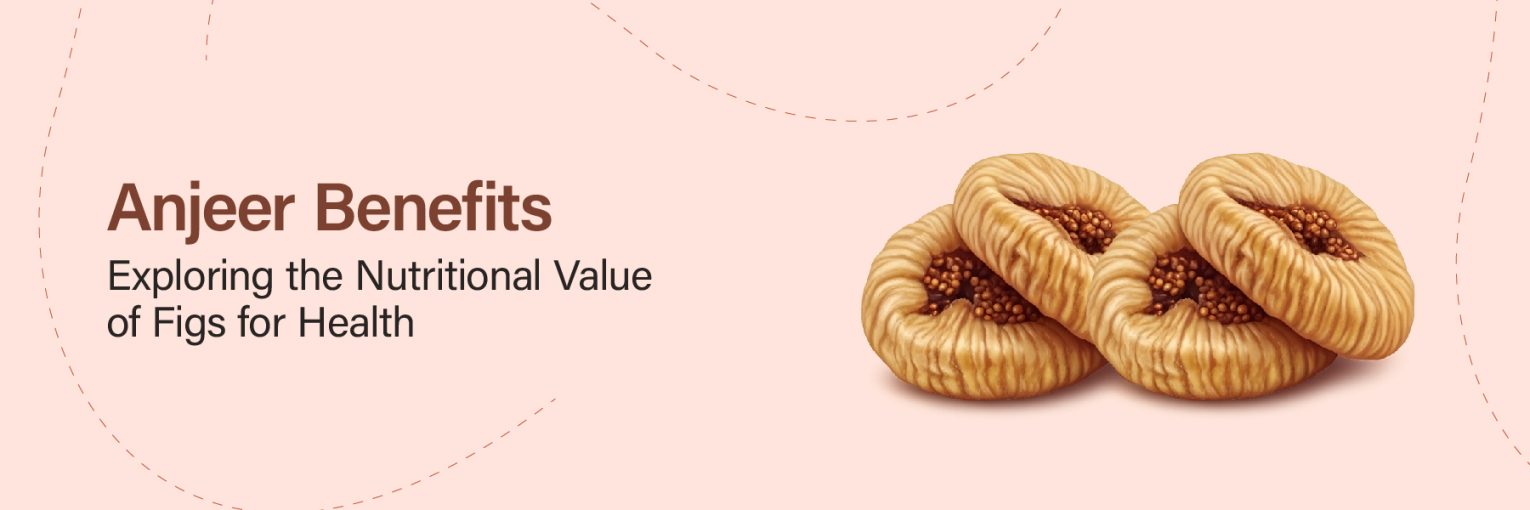
Anjeer (fig) is a small, teardrop-shaped fruit with a soft, jammy centre. Fresh figs are delicate and mild, and dried figs are chewier and naturally sweeter, so they’re easy to pack and eat on busy days. Many people enjoy them for simple, everyday anjeer benefits like smoother digestion and overall wellness.
Across Indian homes, this fruit finds a place in both modern diets and traditional kitchens. You can add it to milk, porridge, salads, or simply eat it as a quick bite before work or workouts. The fruit is also valued in home remedies for digestion and general vitality.
Over time, many families have passed down simple, practical habits around eating it. You can explore dry anjeer uses in snacks, breakfast bowls, or home remedies that fit daily routines.
Know More About Anjeer
Anjeer is known for its soft texture, tiny crunchy seeds, and honey-like sweetness that pairs well with both sweet and savoury foods. The anjeer fruit is small, thumb-sized, and often green or purple on the outside with a pink, fleshy interior. Fresh and dried forms differ a lot. Fresh figs are delicate and must be eaten quickly, while dried figs are stable and taste more intense.
- This fruit has been part of Indian households for generations, used in festive recipes and daily tiffins alike.
- It blends easily into the way we eat, added to warm milk at night, chopped into morning poha, or rolled into energy laddoos for a mid-day lift.
- People appreciate its gentle effect on the stomach and the way it fits into simple eating habits without extra effort.
Over centuries, traditional systems have recommended figs in small, regular portions. The fruit supports mindful snacking because it’s satisfying without being heavy. You can enjoy it on its own or mix it with curd, dates, and nuts for a wholesome bite. Anjeer fruit uses also stretch to basic home remedies, like soaking a few pieces overnight for smoother mornings.
Whether you’re eating clean, managing a busy routine, or just looking for natural foods that feel good, anjeer slips in without fuss.
Nutritional Profile of Anjeer
Think of dried figs as tiny nutrition packs that balance energy, fibre, and essential minerals. When you look at anjeer nutrients, you’ll find they combine everyday practicality with meaningful health value. A 30g portion of dried figs typically offers about 70 to 80 calories, though the exact value can vary with the variety and drying method. It offers about 15g–16g of carbohydrates, around 1g of protein, and minimal fat. This makes them a steady energy source that feels light on the stomach.
- Macronutrients: Dried figs give you quick energy because they’re rich in natural carbs. They also have fibre that helps you stay regular and feel full, even after a small serving. Since they’re low in fat, they make a light snack that won’t feel heavy during the day.
Add a couple to breakfast or pair them with a few nuts when you need something small but satisfying. Drink water so the fibre works well. If you’re watching calories or sugar, keep portions modest because dried fruits are concentrated. For a softer, easier-to-digest option, soak 2–3 pieces overnight and eat them in the morning.
- Micronutrients: A 30g serving offers useful amounts of calcium, iron, magnesium, and potassium. These minerals collectively support bones, circulation, muscle function, and fluid balance. The fruit also carries small amounts of vitamins, including A, C, and B-group vitamins that aid overall wellness.
Beyond the numbers, the fibre works in a simple way, softening stools and helping things move along naturally. Many people also find that having figs with water in the morning sets a gentle rhythm for the day. If you prefer a softer bite, soaked anjeer benefits digestion by turning the fruit plumper and easier to chew, while staying pleasantly sweet.
Antioxidants in figs are another quiet advantage. They help the body handle daily stressors from lifestyle and environment. Look at it like this: a couple of pieces in your regular snack box can add natural sweetness along with support for heart and gut comfort. Over time, anjeer fruit benefits extend to bone strength too, thanks to its calcium content, which matters for people of all ages, especially those with low dairy intake.
Key Health Benefits of Anjeer
Adding figs to your plate is an easy, practical step toward better everyday eating. If you want gentle, natural support without complicated rules, anjeer benefits fit neatly into routine meals and snacks. You don’t need large portions to notice the difference. A few pieces a day can blend into your habits and support long-term balance without feeling restrictive.
Digestive Health
Figs are gentle on your stomach and help you stay regular. Their fibre softens stools and makes mornings easier. Soak 2-3 pieces overnight if you want a softer bite and smoother digestion. You can also eat them with curd for good gut health.
If you travel often or have long workdays, this small habit is easy to follow and doesn’t need much effort. Handy dry anjeer uses include mixing chopped pieces into oats or porridge, blending them into a smoothie, or stirring them into warm water for mild relief on busy days. Start with a small portion, drink enough water throughout the day, and see how your body feels. If you feel bloated, reduce the quantity and try again the next day.
Heart Health
This fruit supports heart health in a quiet, everyday way. Potassium helps balance sodium, which is useful for maintaining healthy blood pressure. Antioxidants play a role too, supporting the body’s defences against daily stress from food and environment. Over time, this kind of steady eating pattern can complement active living and mindful choices.
Bone Strength
Regular, modest portions can aid bone strength as part of a balanced plate. The calcium in figs supports the structure of bones, while magnesium assists with mineral balance. For people who do not get enough dairy, this is a simple add-on. Pairing figs with sesame, paneer, or greens makes a compact, bone-friendly snack.
Weight Management
Figs are naturally sweet, so they satisfy cravings in small amounts. This helps reduce mindless snacking while still feeling content after meals. If you are structuring dietary plans for weight loss, a couple of pieces in the afternoon can prevent late-evening overeating. Keep portions modest and pair with nuts to steady hunger.
Blood Sugar Regulation
A small serving works well within planned meals because fibre slows down how fast sugars are absorbed. This keeps the rise steadier and comfortable. With thoughtful use, it fits into routines that aim for blood sugar regulation over the day.
A small portion can easily be included in regular meal plans. As dried figs are naturally sweet, individuals with diabetes should watch their blood sugar levels and limit their intake to about one or two pieces.
Skin and Hair Health
The fruit’s antioxidants and minerals support your natural glow from within. Over time, a balanced plate that includes fruits, vegetables, and clean proteins matters most. Figs can be one of those simple daily choices that add up. For a daily routine, include them in a diet for healthy hair and skin alongside hydration and sound sleep.
Immunity Boost
Variety in everyday food choices helps the body cope better through seasons and stress. Figs contribute fibre, minerals, and antioxidants, which work well with other whole foods. Think of them as one piece of a fuller nutritional puzzle that supports an overall immunity boost when combined with rest and movement.
How to Include Anjeer in Your Daily Diet
If you like structure, plan a small, steady anjeer diet that suits your mornings or mid-day break. Start simple and keep portions modest so you enjoy the taste without overdoing it. A couple of pieces can be enough for most people, especially when paired with nuts or curd.
- Soaked morning ritual: Soak 2–3 dried pieces overnight and eat them on an empty stomach. The texture becomes soft, and the fruit feels gentler for digestion.
- Breakfast add-ins: Chop and mix into oats, daliya, poha, or curd bowls for natural sweetness without extra sugar.
- Snack smart: Combine with a few almonds or walnuts to improve satiety during long work hours.
When you want to understand why this fruit is worth the habit, remember the nutritional value of dry anjeer adds fibre, minerals, and energy in a small serving. If you use capsules or leaf-based products, follow label guidance and consult a professional if you take regular medicines.
Precautions and Considerations
Figs suit most people, but a few basics help you stay safe. If you feel uneasy after eating them, cut down the portion first and watch how your body responds. In rare cases, allergies can happen; this is one of the anjeer disadvantages to remember.
- Allergy watch: If you’re sensitive to mulberry, latex, or plants from the fig family, be careful. If you notice itching, swelling, or rashes, stop eating them and speak to a doctor.
- Medicine interactions: If you take blood thinners or antiplatelet medicines, you need to talk with your doctor first. This is primarily due to the potential of figs to influence vitamin K levels and interfere with blood clotting in certain individuals.
- Blood sugar and medicines: Figs and fig leaves can make changes to your sugar levels. If you use insulin or diabetes tablets, you need to monitor your readings and adjust portions slowly.
- Digestive sensitivity: Too much fibre too quickly can cause gas or loose stools. Start small, one or two pieces, and drink enough water throughout the day.
- Dental care: Dried figs are sticky and naturally sweet. For this reason, some bits can cling to your teeth. You can rinse your mouth or brush after eating them, and this will protect your enamel.
- Kidney stones: If you’ve been told to limit oxalate-rich foods, check with your healthcare professional before making figs a daily habit. Personal advice matters here. If you’ve been asked to limit high‑oxalate foods because of kidney stones, check with your doctor before making figs a regular part of your diet, as they contain moderate amounts of oxalates.
- Pregnancy and breastfeeding: Eating figs in normal food amounts is generally fine. If you’re unsure, keep portions modest and speak with your doctor for guidance that suits you. Including figs in regular meal portions is generally considered safe. While there’s no firm evidence of adverse effects, it’s best to avoid overconsumption and seek medical advice if you have any concerns.
It helps to look at anjeer advantages and disadvantages together and decide based on your body, routines, and medical plan. Most people do well with small, regular servings woven into balanced meals. If you are on prescription drugs or have a chronic condition, a quick check-in with your doctor is a good idea before making it a daily ritual.
FAQs
What are the top health benefits of anjeer?
Anjeer supports smooth digestion thanks to its fibre, which helps maintain regular bowel movements. It offers minerals like calcium, iron, magnesium, and potassium that aid bone strength, circulation, and muscle function. Antioxidants in figs support heart wellness and everyday immunity. Many people also notice better satiety and a gentle energy lift from small portions.
Can I eat anjeer daily for better health?
Yes, in small amounts. Two to three dried pieces a day suit most people when balanced with meals and enough water. Soaking them overnight makes the texture softer and easier on the stomach. If you’re sensitive to dried fruits or on specific medicines, start with one piece and see how your body responds.
What is the advantage of anjeer for weight loss?
It helps manage sweet cravings in controlled portions while adding fibre that keeps you fuller for longer. Replace a sugary dessert with 1-2 pieces of anjeer paired with a few nuts to steady hunger and avoid spikes in appetite. Keep an eye on total calories, as dried fruits are energy-dense. Consistency and portion control matter more than large, occasional servings.
Is anjeer good for diabetes patients?
It can fit into a planned plate because fibre slows sugar absorption, but portion size is key. Have 1–2 pieces with meals or pair with protein or nuts to blunt spikes. If you use insulin or diabetes medicines, monitor your levels and adjust timing and quantity with your doctor’s advice. Fresh figs are lighter per piece, while dried ones pack more natural sugars in a small bite.
What is the best time to eat anjeer?
Morning soaked figs are gentle on digestion and work well on an empty stomach for many people. For quick, clean energy, 1–2 pieces before a workout can help. As a mid-day snack, pair them with curd or nuts to avoid late-evening overeating. If you have reflux, avoid large portions late at night, and rinse your mouth after eating dried fruits to protect your teeth.