



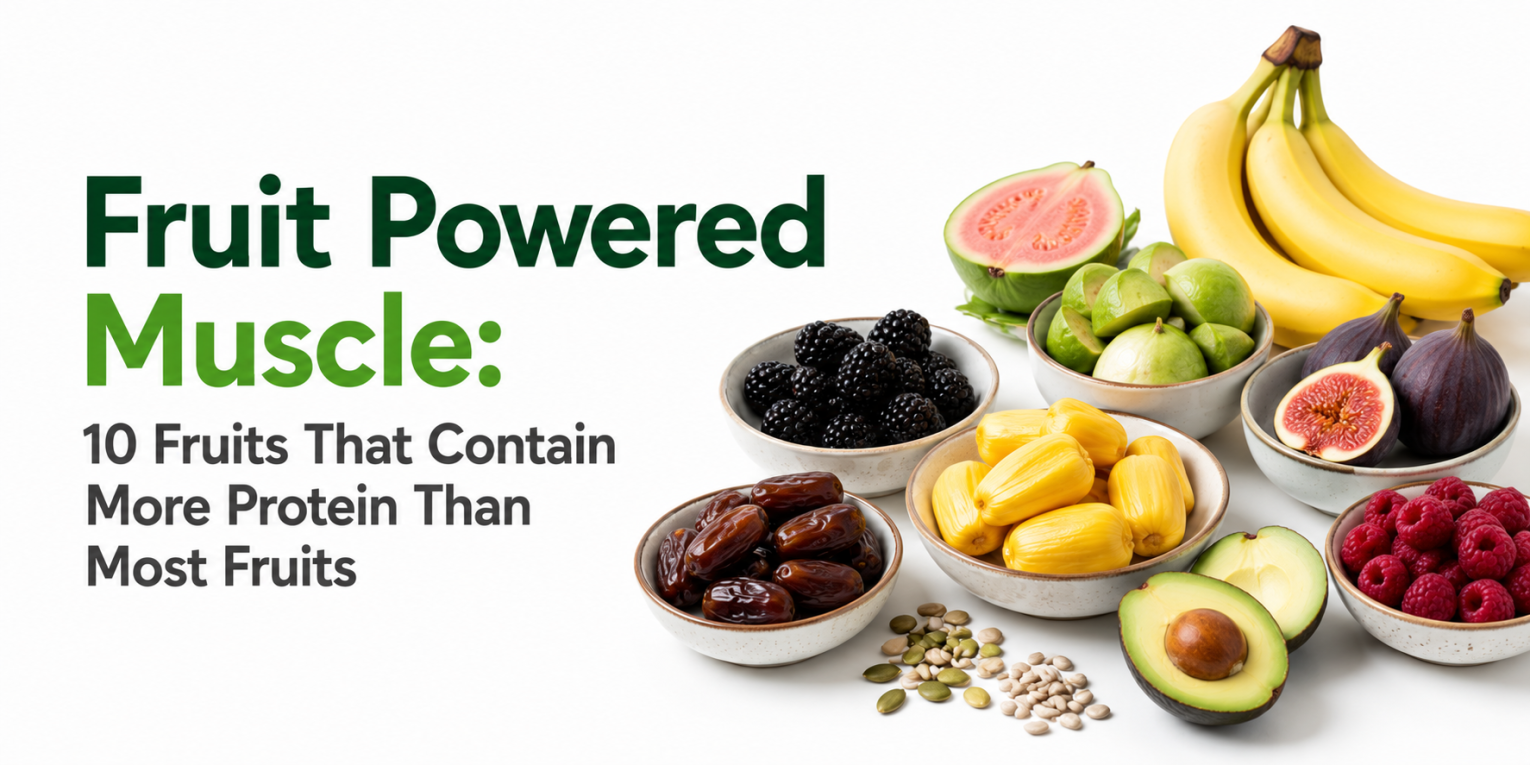
When people think about protein, foods like eggs, chicken, fish, milk and lentils usually come to mind first. Fruits are rarely included in that conversation. Still, some fruits contain small but useful amounts of protein along with fibre, antioxidants, vitamins and water content that support overall health. They also make the diet more balanced and naturally nutritious without feeling too heavy or complicated.
Many people searching for protein rich fruits are often surprised to learn that some fruits offer a useful nutritional boost alongside their natural sweetness. There is greater attention on the best high-protein fruits easily available in everyday markets because people move towards balanced and plant-focused eating habits.
This blog explores the top 10 fruits rich in protein, the best time to eat them, practical pairing ideas and the benefits of choosing whole fruits over juices.
Why Some Fruits Contain More Protein Than Others
Not all fruits have the same nutritional profile. Some fruits naturally contain slightly more protein because of differences in their seed content, plant biology, and overall nutrient composition. Some tropical fruits, such as guava and jackfruit, contain relatively higher amounts of fibre and certain nutrients, but nutrient composition varies widely between fruits.
Seed Density
Fruits with more edible seeds often contain slightly higher protein levels. Seeds naturally contain nutrients needed for plant growth. Fruits like guava and passion fruit fall into this category.
Lower Water Content
Fruits with less water concentration may have more nutrients. Bananas and avocados are good examples because they are denser compared to watermelon or muskmelon.
Fibre and Nutrient Composition
Some fruits contain a combination of fibre, healthy fats and protein. This makes them more filling and nutritionally balanced.
Tropical Growth Conditions
Many tropical fruits develop thick flesh and nutrient-rich interiors due to climatic conditions. Jackfruit and guava are commonly included among fruits that are slightly higher in protein than many commonly consumed fruits for this reason.
Mineral-Rich Soil
Growing conditions, including soil quality, can influence the nutrient composition of fruits, although genetics and fruit variety play a larger role.
Some fruits provide iron alongside protein, making them an appropriate fruit with iron and protein for balanced diets.
.
Top 10 Fruits Highest In Protein To Add To Your Diet
Fruits alone cannot fulfil total daily protein needs. But adding the right ones can support a balanced eating pattern. Some of the top 10 fruits rich in protein that are good for your diet are:
1. Raspberries
Raspberries have about 1.5 grams of protein in a cup. Along with that, they are rich in fibre, vitamin C and antioxidants that help protect the body from daily stress.
They are quite filling because of their fibre content, so they can keep you satisfied for longer. Most people enjoy them with yoghurt, oats or even in smoothies. Among fruits that contain protein, raspberries feel like a light but nutritious option.
2. Blackberries
Blackberries give around 2 grams of protein per cup. They also bring in nutrients like vitamin K, manganese and fibre.
They are helpful for digestion and may also support steady blood sugar levels when eaten in moderation. Their slightly tangy taste works well with curd, nuts or seeds. People who look for fruits containing high protein often go for blackberries because they feel both filling and refreshing.
3. Bananas
A medium banana has roughly 1.3 grams of protein. What it is really known for is potassium, which supports muscles and hydration.
Many people eat bananas before workouts because they give quick energy without feeling heavy. When combined with milk or peanut butter, they become more balanced. For anyone choosing protein rich fruits, bananas are simple, affordable and always available.
4. Apricots
Fresh apricots have about 1 gram of protein per cup. Dried ones usually have a bit more since the water is removed.
They are also rich in vitamin A. It is good for skin and eye health. The soft sweetness makes them easy to include in breakfast bowls or light snacks. Apricots are often counted among the best high protein fruits for everyday eating.
5. Kiwifruit
Kiwifruit has around 0.8 grams of protein per cup. It is full of vitamin C, folate and antioxidants that support overall health.
It also has natural enzymes that may help the body break down food better. Kiwis are one of those fruits that are high in protein and are often liked for their fresh taste and digestive benefits.
6. Avocado
Avocado feels a bit different from most fruits because it is rich and creamy. Around 3–4 g protein per cup, depending on variety and serving size.
Also, it is rich in healthy fats, which help to improve heart health and give the fruit nutritional value. People generally include avocado in lists of fruits that contain protein because of its filling nature and versatility in meals.
7. Pomegranate
Approximately 2.9–3.0 g protein per cup of aril seeds. It is also packed with antioxidants that support overall heart health.
The seeds have a crunchy texture, which makes them easy to sprinkle over salads, yoghurt or even fruit chaat. It also contains small amounts of iron, so it often comes up when people talk about a fruit with iron and protein.
8. Jackfruit
Jackfruit has around 2.8 grams of protein per cup and is quite common in many households. It is also known as a plant-based alternative in vegetarian meals and is among the top 10 fruits rich in protein.
Raw jackfruit is used in savoury dishes like curries because of its firm texture. But ripe ones are soft and sweet.
9. Passion Fruit
Approximately 5 g per cup (pulp with seeds), depending on how it is measured. It also has fibre and antioxidants that are good for digestion and overall health.
The sharp and tangy taste makes it delicious in smoothies and fruit bowls. People who prefer fruits containing high protein usually overlook passion fruit despite its nutritional value.
10. Guava
Guava has roughly 2.5 grams of protein per cup. It is also rich in vitamin C and fibre. This supports immunity and digestion.
Guava is often considered one of the best high protein fruit because of its mix of nutrition and availability.
The Best Times Of Day To Eat High-Protein Fruits
At what time you eat fruit can make a difference in how you feel in terms of energy, digestion and fullness. People often ask, “when is the best time of day to eat fruit for better digestion”? It really depends on your routine and how your body reacts.
- Morning Consumption– Fruits eaten in the morning can make you feel fresh. They provide quick energy and may also help in digestion due to their fibre content.
- Before Exercise– Fruit such as bananas, guavas or berries is an excellent choice prior to workouts. These fruits are easily digested and do not make one feel heavy.
- After Exercise– Fruits can be paired with yoghurt, milk or nuts after exercising. This helps make the snack more filling and supports recovery.
- Midday Snack– Fruits between meals can stop unnecessary hunger. If combined with a protein food, they keep you full for longer.
- Night-Time Intake– It is better not to overeat fruit at night if digestion is sensitive. Still, small portions are usually fine if they suit your body.
| Time Of Day | Suitable Fruits | Potential Benefits |
| Early Morning | Guava, kiwi, pomegranate | Hydration and vitamin intake |
| Before Workout | Banana, jackfruit | Quick energy support |
| After Workout | Berries, avocado | Recovery support |
| Midday Snack | Apricot, blackberry | Satiety and fibre |
| Evening | Passion fruit, guava | Light and nutritious snack |
Many people who wonder “when should you eat fruit in the day” may benefit from spreading fruit intake across meals instead of eating large portions at once.
How To Pair These Fruits With Other Protein Sources
Understanding different protein sources helps create more balanced meals throughout the day.
Blackberry, Papaya and Cantaloupe
This fruit combination pairs well with Greek yoghurt or cottage cheese.
- Greek yoghurt provides complete proteins and calcium.
- The papaya helps in digestion due to the presence of enzymes.
- The cantaloupe provides hydration and vitamin A.
- Blackberries provide fibre and antioxidants.
This combination highlights the difference between animal protein versus plant protein because dairy products provide all essential amino acids, while fruits mainly supply supportive nutrients.
Fig, Red Grape and Pomegranate
This combination works well with nuts and seeds.
- Almonds contain healthy fats and proteins.
- Pumpkin seeds will help increase the intake of zinc and magnesium.
- Pomegranates provide antioxidants.
- Figs are rich in fibre and natural sugars.
Including seeds and nuts introduces different kinds of protein foods into the diet without depending entirely on meat products.
Cherry, Pineapple and Blueberry
This fruit mix pairs effectively with paneer or tofu.
- Paneer provides good protein.
- Tofu gives plant protein.
- Pineapples contain bromelain and help digest food.
- Blueberries give antioxidants.
This combination may work well after exercise because it balances carbohydrates and protein.
Goji Berry, Watermelon and Lemon
This refreshing combination can be served with boiled chickpeas or sprouts.
- Chickpeas contribute plant protein and fibre.
- The watermelon provides water content.
- The lemon enhances the flavouring and consumption of vitamin C.
- Goji berries offer antioxidants.
Using legumes alongside fruits is a practical way to include different protein sources in everyday meals.
When To Eat Whole Fruits Instead Of Drinking Their Juice
Fruit juices are favoured since they are convenient to consume and are refreshing in nature. But whole fruits tend to be more nutritious than juices.
The debate around whole fruit vs fruit juice usually centres on fibre, sugar absorption and satiety.
Whole Fruits Provide More Fibre
Fibre slows down sugar absorption and supports digestive health. Juicing removes much of this fibre.
An apple contains more fibre than filtered apple juice. This is one reason nutrition experts compare apple juice vs. apple when discussing healthy eating habits.
Whole Fruits Increase Fullness
Chewing whole fruits takes longer and promotes satiety. Drinking juice quickly may lead to excess calorie intake.
Juice Can Raise Blood Sugar Faster
Fruit juice may cause quicker blood sugar spikes without fibre. This is important for people managing diabetes or insulin resistance.
Blended Juices Are Better Than Filtered Juices
Smoothies that retain fruit pulp are generally more nutritious than strained juices. Discussions around blended fruit juice vs whole fruit often show that whole fruits still provide superior fibre content.
Conclusion
Although fruits are not considered primary protein foods, they can still play an important role in a balanced eating routine. Including protein-rich fruits in everyday meals may help increase fibre, antioxidants, vitamins and other essential nutrients while adding small amounts of protein naturally. These fruits work even better when combined with wholesome foods like yoghurt, nuts, seeds or legumes.
FAQs
How to eat more protein?
You can consume more protein by adding eggs, milk products, nuts and meat to the diet. Also, fruits that contain protein with balanced meals may also contribute to overall intake.
Is 2 eggs a day enough protein?
Two eggs provide around 12 grams of protein. This may not be enough for total daily needs. Most adults require protein from multiple meals and food sources throughout the day.
What are protein-rich snacks?
Protein-rich snacks include roasted chickpeas, boiled eggs, Greek yoghurt, sprouts, paneer cubes and nuts. Some fruits containing high protein can also be paired with these snacks for better nutrition.
What are the best high-protein breakfast foods?
Good high-protein breakfasts include eggs, oats with milk, paneer sandwiches, yoghurt bowls and lentil-based dishes. Including the best high-protein fruits with breakfast can improve fibre and vitamin intake.
Which is the king of protein?
There is no single food that can be called the “king” of protein, as different foods offer different benefits. However, eggs are often regarded as a high-quality protein source because they contain all the essential amino acids needed by the body.
What is a good alternative to eggs for protein?
Paneer, tofu, lentils, chickpeas and Greek yoghurt are the ideal ones. You can easily add these foods to everyday meals and create a more balanced and nutrient-dense diet.
Is protein better in the morning or at night?
Protein is important at all times of the day. The ideal way is to consume protein during every meal of the day. This will help ensure that the body maintains its muscles and energy stability.
Disclaimer: This article is intended for educational purposes only and should not be considered medical or nutritional advice. While some fruits contain small amounts of protein, they are not primary protein sources and should be consumed as part of a balanced diet. Individual nutritional requirements vary depending on age, activity level, medical conditions, and overall dietary intake. Consult a qualified healthcare professional or registered dietitian for personalised nutrition advice.