



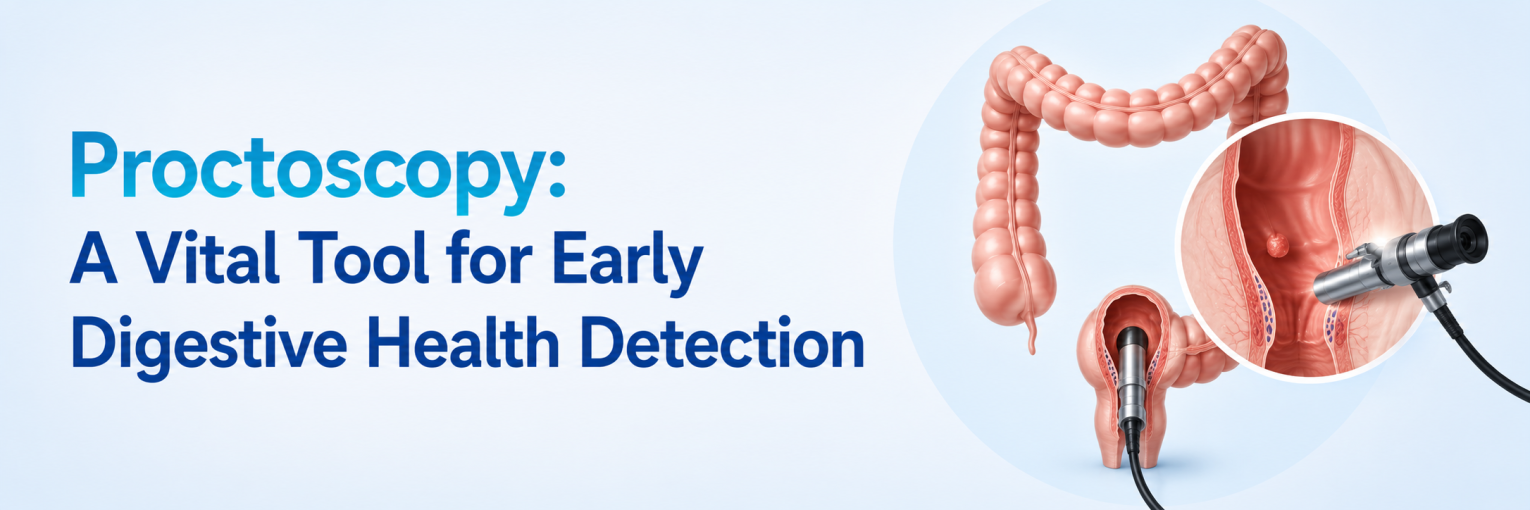
When a patient notices rectal bleeding, pain while passing stool, mucus discharge, or a constant feeling that the bowel has not emptied properly, the doctor may advise a closer look at the lower rectal area. One of the most common ways to do that is proctoscopy. It is a short, focused examination that allows the doctor to directly inspect the anal canal and rectum with a special instrument called a proctoscope.
A proctoscopy test is usually done when symptoms point toward a problem in the lower bowel, and the doctor wants direct visual confirmation instead of relying only on description. This matters because symptoms in that area often overlap. A person may assume the problem is something minor, but bleeding, discomfort, itching, discharge, or bowel changes can be linked to different conditions that look similar in the early stage.
Why It’s Needed?
It gives the doctor a direct view of the area and helps identify visible causes such as haemorrhoids, inflammation, polyps, or other abnormal tissue.
- In some cases, the findings are simple. In others, the test helps decide whether the patient needs a biopsy, follow-up, or a larger digestive health check.
- Patients are often anxious when they hear the name of the test. They usually want simple answers. What exactly is proctoscopy? Why is it done? Does it hurt? What can it detect? How should they prepare? Those are reasonable questions, and most of them are best answered in plain language rather than technical jargon.
- The good thing is that this is not a vague or open-ended test. It is quite targeted. It is done to look at a very specific part of the lower bowel, and that makes it useful in everyday practice. When symptoms are localised and persistent, a direct visual examination can give much clearer information than guesswork.
Early Evaluation
It is also worth saying that timely evaluation matters. People often delay bowel-related tests out of embarrassment or fear, especially when symptoms seem small at first. But a short examination done at the right time can prevent long delays in diagnosis. In that sense, proctoscopy is not just a procedure. It is a practical step toward early digestive assessment and clearer treatment planning.
What is a Proctoscopy and Why is it Performed?
Proctoscopy is a medical examination used to inspect the anal canal and rectum. The doctor performs it with a proctoscope, which is a short tube with a light that allows direct viewing of the lower bowel lining. It is used when the doctor wants to identify visible abnormalities that may explain symptoms coming from the rectal region.
The main reason for proctoscope use is simple. If a patient reports rectal bleeding, pain, swelling, discharge, constipation, or a repeated feeling of incomplete bowel emptying, the doctor may need to see the area directly. These are some of the most common proctoscopy indications in clinical practice.
The test may be advised in situations such as:
- Rectal bleeding.
- Suspected hemorrhoids.
- Pain during or after passing stool.
- Persistent mucus discharge.
- A feeling of incomplete bowel emptying.
- Suspicion of rectal inflammation.
- Follow-up of previously identified lower rectal conditions.
- Evaluation of abnormal findings from another digestive health check.
Role of Proctoscopy
A proctoscopy does not look at the whole colon. Its role is much more limited and much more focused.
- It is mainly used when symptoms seem to arise from the lower bowel, especially the anal canal and rectum. That focused role is one reason it remains useful. It can give quick, direct information without immediately moving to a larger bowel examination.
- In some patients, the test may be enough to explain the complaint. For example, the doctor may identify hemorrhoids or obvious inflammation during the examination itself.
- In other cases, the visual findings may raise questions rather than settle them. A suspicious growth, unusual bleeding point, or irregular tissue may lead to biopsy, sigmoidoscopy, colonoscopy, or further imaging.
For patients, that makes the test practical rather than abstract. It helps move the discussion from symptoms alone to visible findings. Once the doctor can see what is happening, the next step usually becomes easier to plan.
When It’s Most Helpful?
It is also helpful in cases where symptoms have gone on for some time without a clear answer. A patient may have been treating discomfort as hemorrhoids at home, or ignoring bleeding because it comes and goes. A direct examination can shorten that period of uncertainty. Even when the result shows something common, it still gives clarity.
How Proctoscopy Helps Detect Haemorrhoids, Polyps, and Inflammation
This is one of the main reasons proctoscopy is still widely used. Lower bowel symptoms can sound similar from one patient to another, but the actual cause may be quite different.
- Direct visual examination helps the doctor separate one problem from another instead of assuming the cause from symptoms alone.
- Haemorrhoids are among the most common findings. These are swollen blood vessels in or around the lower rectum and anus, and they may cause bleeding, itching, discomfort, or a feeling of fullness.
- During proctoscopy, the doctor may be able to identify internal haemorrhoids and judge how prominent they are.
- Inflammation is another important finding. The lining of the rectum may look red, swollen, irritated, or fragile.
- Patients with inflammation may complain of pain, urgency, discharge, or bleeding. A direct view helps the doctor decide whether the symptoms fit a local inflammatory process and whether more evaluation is needed.
Polyps are also clinically important. These are growths that arise from the inner lining of the bowel. Not every polyp is dangerous, but some may need removal or closer assessment depending on their size, appearance, and position. Polyps symptoms are not always obvious. Some patients notice bleeding or mucus discharge, while others may not have clear symptoms at all.
How the Test Helps
A brief overview is shown below:
| Condition | What proctoscopy may help show | Common patient complaints |
| Hemorrhoids | Swollen internal vascular tissue | Bleeding, discomfort, itching |
| Inflammation | Redness, irritation, swelling, fragile lining | Pain, discharge, urgency, bleeding |
| Polyps | Visible abnormal growth in the lower rectal area | Bleeding, mucus, altered bowel habits, sometimes no clear symptoms |
| Suspicious lesion | Abnormal tissue requiring further evaluation | Persistent bleeding, pain and unexplained rectal symptoms |
The table reflects an important clinical point. Many patients come in with the same complaint, especially bleeding, yet the reason behind it may differ a lot. One patient may have haemorrhoids. Another may have inflammation. Another may have a polyp. Without a direct look, those conditions can be difficult to separate in the early stage.
If Symptoms Recur
If bleeding comes back, bowel discomfort continues, or the patient keeps feeling that something is not right, the doctor may want to check whether the issue is stable, getting worse, or showing something new. A short examination can answer that more directly than repeated symptom-based treatment.
It is worth remembering that not every visible abnormality leads to a serious diagnosis. Many findings are common and treatable. But even then, seeing the area properly helps reduce confusion and allows the doctor to make decisions with more confidence.
Preparing for the Procedure: Diet and Cleansing Instructions
Patients usually feel more comfortable when they know what to expect before the appointment. Preparation for a proctoscope procedure is often simpler than preparation for a full colon examination, but it still matters. The exact instructions may depend on the centre’s protocol and the doctor’s reason for ordering the test.
- In general, the aim is to keep the lower rectal area clear enough for proper viewing. Some patients may be asked to use a local cleansing method before the procedure. This is done so that the doctor can see the area more clearly and complete the examination without unnecessary difficulty.
- Diet advice can vary from patient to patient; however, most of them will be advised to take only a light overnight dinner. Because the recommendations are not identical in every case, the safest approach is always to follow the guidance given at the time of booking.
- It is also important to tell the doctor in advance about certain issues. These may include severe rectal pain and active heavy bleeding. Details like these can change how the procedure is planned.
- On the day of the test, comfortable clothing can help. Arriving a little early is also useful. That may sound basic, but small practical steps often make the visit smoother.
Is it Painful?
In most cases, patients describe it as uncomfortable rather than severely painful. There may be a feeling of pressure, fullness, or temporary discomfort, especially if the area is already inflamed or tender.
- When patients know the procedure is usually short and structured, they tend to feel less tense. Relaxation is not just a comfort issue. It can also make the examination easier to perform.
- Preparation is therefore not only about cleansing. It is also about reducing uncertainty. Once the patient understands why the test is being done and what the experience is likely to be, the whole process usually feels more manageable.
Early Detection of Rectal Cancer through Visual Examination
Persistent lower bowel symptoms should never be brushed aside for too long, especially when bleeding keeps returning. Proctoscopy is not a complete cancer screening tool for the whole large bowel, but it can help detect suspicious changes in the rectal area that need timely attention.
- Rectal cancer symptoms can vary. They may include rectal bleeding, a change in bowel habits, and narrow stool. Some people may not notice dramatic symptoms in the early stage.
- The causes of rectal cancer are not limited to one factor. Risk may be influenced by age, family history, personal bowel history, inherited conditions, and long-standing inflammation. That is why doctors do not rely on assumptions alone when symptoms persist.
- What proctoscopy can do is give the doctor a direct look at the lower rectum. If there is an abnormal growth, ulcerated area, irregular tissue, or an unexplained bleeding point, that visual finding may lead to biopsy or more extensive testing. In that way, the examination can play a useful role in early direction of care.
Early detection is not about an alarm. It is about acting while the problem is still easier to evaluate. When suspicious symptoms are checked early, the next step becomes clearer, and the patient is not left guessing for months.
Proctoscopy Procedure at Vijaya Diagnostics
If your doctor has advised a proctoscopy test, the quality of the care setting matters. Patients usually benefit when instructions are clear, preparation is well organised, and the process is explained in a calm and practical way.
At Vijaya Diagnostics, patients are typically guided through the visit with attention to scheduling, preparation, and procedural coordination. The centre operates under robust quality protocols and is supported by recognised certifications and accreditations such as NABL, NABH, and ISO 9001:2015 certification.
FAQs
What conditions can be detected through proctoscopy?
Proctoscopy may help detect internal haemorrhoids, inflammation, visible polyps, suspicious lesions, bleeding points, and other local abnormalities in the anal canal and rectum.
How long does a proctoscopy typically take?
The examination itself is usually short. The full visit may take longer because of preparation and discussion before or after the test.
Is proctoscopy a painful procedure?
Most patients describe it as not being severely painful. Pressure and temporary discomfort are more common than sharp pain.
Are there any dietary restrictions before the procedure?
Preparation instructions can vary. You should follow the exact diet or cleansing advice.
What role does gut health play in overall well-being?
Good digestive function supports comfort and bowel regularity. Gut health improvement also means paying attention to warning signs.
How often should I get screened for gut-related issues?
That depends on age, symptoms, and personal history. Some people need testing only when symptoms appear.
What lifestyle changes can I make to improve my gut health?
Simple habits still matter most. Eat a balanced diet and stay active. That is often where real gut health improvement begins.