



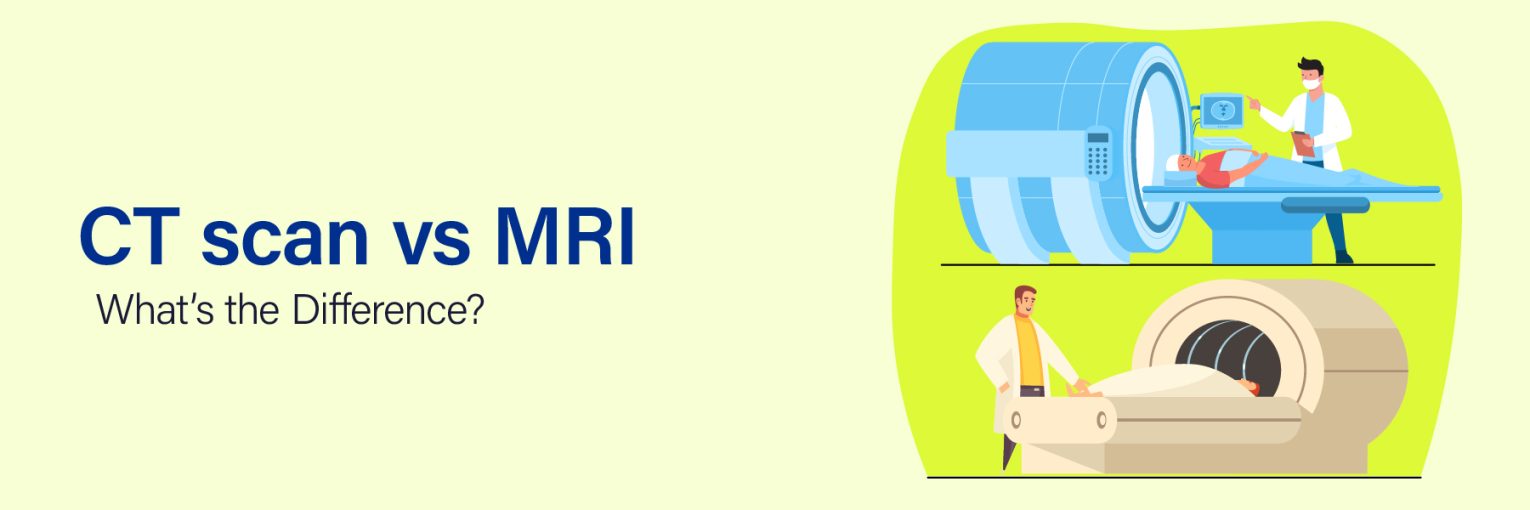
When a doctor asks for imaging or radiology tests, the main question is usually whether a CT scan or an MRI scan will answer the clinical problem more clearly. A CT scan uses X‑rays to create cross‑sectional images, while an MRI scan uses a strong magnetic field and radio waves, not ionising radiation. Both scans can be highly useful, but the choice depends on urgency, the body part being evaluated, and safety factors such as pregnancy or metal implants.
Understanding CT Scan and MRI at a Glance
A CT scan (computed tomography) creates images using X‑rays and computer processing. It is commonly chosen when fast imaging is needed, especially in urgent clinical situations.
An MRI scan (magnetic resonance imaging) creates images using a strong magnetic field and radio waves, which means it does not use ionising radiation. It is often preferred when a doctor needs a detailed soft tissue assessment, depending on the condition and the patient’s ability to safely undergo an MRI.
| Feature | CT scan | MRI scan |
| How images are created | Uses X‑rays (ionising radiation). | Uses magnets and radio waves (no ionising radiation). |
| Speed (general) | Often quicker image acquisition. | Often takes longer than CT, depending on the study. |
| What it is commonly strong for | Rapid assessment, including many acute settings. | Soft tissue detail for many neurological and musculoskeletal assessments. |
| Key screening focus | Radiation exposure considerations. | Metal/implant compatibility due to the magnetic field. |
Common terms patients see on prescriptions –
- “Plain study” means the scan is done without contrast injection.
- “With contrast” means a contrast agent may be used to improve the visibility of certain tissues and blood vessels.
- “Study time” refers to the scanning time, not the total visit time.
Core Differences Between CT Scan and MRI
People often search “MRI vs CT scan” because both are advanced scans, but they work differently and serve different purposes. The most important CT scan vs MRI difference is the technology used: CT uses X‑rays, and MRI uses magnets and radio waves. That single difference affects safety screening, scan duration, and the type of detail visible on images.
1) Imaging method and what it means for patients
- CT uses ionising radiation because it relies on X‑rays, so clinicians consider radiation exposure, especially for repeat scans.
- MRI does not use ionising radiation, but it requires careful screening for metal implants or metal fragments due to the magnetic field.
2) Scan duration and patient comfort
In many situations, CT is faster to perform than MRI. MRI studies often take longer because multiple sequences may be required for the region being assessed. For example, an MRI 1.5 brain routine study time is shown as about 40-50 minutes for the scan itself.
3) Type of detail (general, not absolute)
MRI is often selected when detailed soft tissue imaging is needed, such as certain brain, spine, joint, ligament, or muscle evaluations. CT can be selected when rapid cross‑sectional imaging is needed, particularly in urgent clinical contexts.
4) Practical access and workflow
CT scanners are commonly used for quick imaging workflows, which is helpful when a clinical decision must be made quickly. MRI workflows require longer scan times and stricter safety screening, which affects scheduling and preparation.
Where Each Scan Is Commonly Preferred
A CT scan is commonly chosen when:
- The situation is urgent, and imaging needs to be completed quickly.
- The doctor needs cross‑sectional imaging that fits an X-ray-based protocol.
- MRI is not suitable due to implant or metal safety concerns (paramagnetic concerns).
An MRI scan is commonly chosen when:
- Soft tissue detail is important for the diagnosis.
- A doctor wants a non‑ionising radiation method for suitable clinical indications.
- The patient can safely undergo MRI after screening for implants and metal exposure.
Cost Difference Between CT Scan and MRI
Patients often ask about CT scan cost and MRI scan cost because imaging is a planned expense for many families. Cost depends on the body part being tested, scan complexity, whether contrast is required, and the centre’s protocol. Below is a clear comparison for reference –
| Scan | Price (INR) |
| CT BRAIN PLAIN | ₹ 2700. |
| CT ABDOMEN AND PELVIS | ₹ 7000. |
| MRI 1.5 BRAIN – ROUTINE | ₹ 7700. |
| MRI 1.5 WHOLE ABDOMEN | ₹ 11000. |
Why Cost Differs Between The Two
CT is often priced lower than MRI for many regions because CT acquisition is generally faster, and the workflow is different. MRI usually involves longer study time and multiple sequences, which affects resource use and scheduling and detailed information.
Cost-related points to clarify during booking:
- Ask whether the scan is plain or with contrast, because contrast protocols can change the final amount.
- Confirm whether your prescription requires multiple regions or a single region.
- Confirm whether the centre’s price includes reporting and whether images are provided in film or digital format (as per the centre’s process).
When Is a CT Scan or MRI Recommended?
The choice of CT scan or MRI scan is based on what the doctor needs to evaluate and how quickly the answer is required. In many cases, one scan is the first step and the other is used later if more detail is required.
Clinical situations where CT is often used
A CT scan can be used when rapid imaging is necessary, including some emergency presentations. It is also used when a doctor wants an imaging method based on X‑ray cross‑sectional views. Common examples include:
- Head injury assessment when urgent imaging is needed.
- Sudden neurological symptoms where quick imaging supports immediate decisions.
- Abdomen and pelvis evaluation in selected cases, depending on the doctor’s clinical question and the protocol.
Clinical situations where MRI is often used
An MRI scan is commonly chosen when a doctor needs a detailed soft tissue evaluation. It is often used for many brain and spine assessments because of the soft tissue contrast MRI can provide, depending on the clinical scenario.
Common examples include:
- Brain evaluation where detailed tissue information is required.
- Spine and nerve-related assessment when the doctor needs soft tissue detail.
- Whole abdomen MRI when the prescription specifies MRI‑based assessment rather than CT.
Here’s a simple decision guide:
| If the doctor’s need is | The scan often considered first is | Why |
| Very fast imaging in an urgent scenario | CT scan | CT is typically faster to complete. |
| Detailed soft tissue evaluation | MRI scan | MRI often shows soft tissues in greater detail. |
| Need to avoid ionising radiation (when clinically appropriate) | MRI scan | MRI does not use ionising radiation. |
| MRI not suitable due to metal/implant concerns | CT scan | CT does not have MRI magnetic-field restrictions. |
Safety Considerations Before Choosing CT or MRI
Safety screening is important for both scans, but the risks and precautions are different. A CT scan uses X‑rays, which means ionising radiation exposure is part of the test. MRI uses magnets and radio waves, but the magnetic field creates safety restrictions for patients with certain implants or metal fragments.
CT scan safety considerations:
- Radiation exposure: CT involves ionising radiation, so doctors consider whether the scan is necessary and whether repeat scans are likely.
- Pregnancy: If pregnancy is known or suspected, clinicians may consider alternative imaging or proceed only if clinically necessary, depending on urgency and body region.
- Contrast screening (when contrast CT is prescribed): You may be asked about your kidney function history and allergy history before contrast is used.
A practical point from CT Brain Plain preparation guidance is that no special preparation is required, and consent is required for the procedure.
MRI scan safety considerations:
- Implants and devices: MRI requires strict screening because the magnetic field can interact with certain devices and implants.
- Metal fragments: Any history of metal fragments, especially near the eye, must be disclosed before MRI.
- Scan time and stillness: MRI often takes longer, and staying still is important for image quality.
- Claustrophobia: If anxiety in enclosed spaces is expected, inform the centre before the appointment so guidance can be provided.
A practical point from MRI 1.5 brain routine instructions is to carry the doctor’s prescription and old reports, if available, and consent is required.
Safety Checklist
- Share implant details and any history of metal injury, especially for MRI.
- Inform the centre about pregnancy status before CT or MRI planning.
- Confirm whether contrast is planned and ask what information is required.
- Follow instructions on jewellery and metal removal, especially for MRI.
Preparation Before CT or MRI
Preparation varies depending on the body region and the protocol. Some scans require no special preparation, while others may require fasting or additional screening.
Preparation that is commonly advised for CT:
- Carry your prescription and prior reports if available.
- Follow fasting instructions if abdomen/pelvis imaging or contrast is planned.
- Remove metal items if instructed, especially around the head and neck region.
For CT Brain Plain specifically, no special preparation is required, and consent is required.
Preparation that is commonly advised for MRI:
- Remove all metal items (jewellery, watches, hairpins, belts) before entering the MRI area.
- Share implant and device details during scheduling so MRI compatibility can be verified.
- Carry the prescription and old reports if available, because this supports protocol selection and clinical comparison.
| Step | CT scan | MRI scan |
| Metal items | Remove if instructed | Remove all metal items due to the magnetic field. |
| Fasting | Depends on the region and contrast | Depends on the region and contrast |
| Consent | Often required | Often required |
| What to carry | Prescription, old reports | Prescriptions and old reports are specifically advised for the MRI 1.5 brain routine. |
Conclusion
CT scan vs MRI is best understood as choosing the right tool for the right clinical question. CT uses X‑rays and is generally faster, while MRI uses magnets and radio waves and is often chosen for detailed soft tissue assessment without ionising radiation. The correct choice depends on symptoms, urgency, and safety screening.
For patients who want a structured booking process and clear scan options, Vijaya Diagnostics provides CT and MRI services across multiple centres and supports scheduled radiology appointments.
FAQs
Is an MRI safer than a CT scan?
MRI does not use ionising radiation, while CT uses X‑rays that involve ionising radiation.
MRI still requires strict screening for implants and metal because it uses a strong magnetic field.
What is the cost difference between a CT scan and an MRI in India?
Costs vary depending on the body part scanned and centre, but CT is often priced lower than MRI for many regions.
As stated above, CT Brain Plain is ₹2700 and MRI 1.5 Brain Routine is ₹7700.
Can an MRI and CT Scan be done if I have metal implants?
CT does not have MRI magnetic field restrictions in the same way. MRI can be done only if the implant is MRI‑compatible and the centre clears it during screening.
Which scan is better for brain and spine problems?
MRI is often chosen for detailed soft tissue evaluation of the brain and spine when clinically appropriate. CT may be used when fast imaging is needed in urgent scenarios, depending on the clinical picture.
Is MRI painful or harmful?
MRI is non‑invasive and does not use ionising radiation. The main requirement is to stay still, and safety depends on proper screening for metal and implants.
Do I need any preparation before CT or MRI?
Preparation depends on the body region and whether contrast is planned. For example, CT Brain Plain typically requires no special preparation, while MRI 1.5 Brain Routine advises carrying a prescription and old reports.
Which is better: CT scan or MRI?
Neither scan is universally better; each is selected based on the clinical need. The main CT scan vs MRI difference is that CT uses X‑rays, while MRI uses magnets and radio waves, which is usually the common deciding factor.