



Racing hearts are not always a sign of excitement. Sometimes, the body tries to warn us in quiet ways. A little breathlessness while walking. Sudden tiredness after climbing a few stairs. Mild chest discomfort that disappears within seconds. Most people ignore these signals. They blame age, stress, or a long day at work. Doctors use special tests to understand what the heart is trying to say. One such test helps them check how strong and healthy your heart really is the TMT test. This blog will highlight several details about the test.
What is the TMT Test?
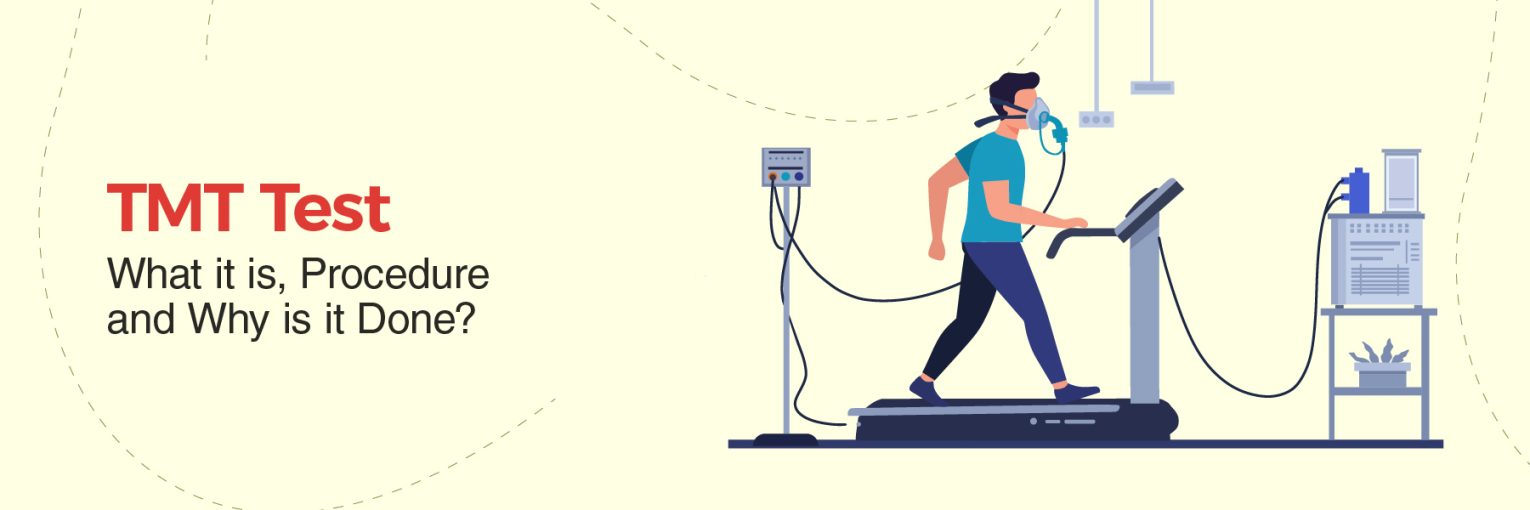
The TMT test is a medical test to see how your heart works while you are doing an activity. TMT stands for Treadmill Test. The TMT test meaning is the same as the Stress Test. In this test, you walk on a treadmill or pedal a stationary cycle. Speed is gradually increased to make your heart work harder.
As you walk or bike, doctors watch your heartbeat on a monitor. They also listen to your blood pressure and breathing. You have small sticky patches called electrodes put on your chest to record your heart’s electrical activity.
The idea of the TMT health checkup is to look at how your heart behaves when challenged. A healthy heart accommodates exercise with ease. But if there is a problem, such as an obstruction in the blood vessels that supply the heart, it might raise red flags during testing.
The TMT test does not involve any injections or incisions. It is easy, safe and generally painless for people. The TMT result assists in finding early evidence that the heart itself is affected by disease before things get serious. It is for people with symptoms including chest pain, fatigue or shortness of breath.
Need for TMT Test for the Heart
The heart works all day without rest. Sometimes, it may get weak or blocked without showing clear signs. The TMT medical test helps doctors find such hidden problems early. It shows how the heart reacts when it is under pressure, just like in real-life situations such as walking fast, running, or climbing stairs.
Some reasons why the TMT test is needed are as follows:
- To detect early signs of heart blockage
When the heart’s blood vessels are narrow or blocked, enough blood does not reach the heart during exercise. The TMT of heart helps find this before it becomes dangerous.
- To check the cause of chest pain or breathlessness
Some people feel pain or discomfort in the chest. Others get tired quickly. The TMT test helps doctors understand if these problems are related to the heart.
- To know how strong your heart is
The TMT test procedure reveals how smoothly your heart tolerates stress. If it beats regularly during exercise, the heart is strong.
- To check recovery after heart treatment
Those who have had heart surgery or received treatment for heart problems may be asked to undergo this test. It allows doctors to check if the treatment was effective.
- To plan safe exercise levels
Doctors use the TMT test to determine at what level activities, such as gym workouts or sports, are safe for people who need to resume them.
TMT Test Procedure
The TMT scan test is done in three clear stages — preparation, testing, and recovery. Here’s how it happens in real life.
Before the Test
- You may be asked to avoid heavy meals, tea, or coffee a few hours before the test so that your heart rate stays natural.
- Regular medicines are discussed with the doctor, who clearly tells you which ones to continue and which ones to pause for the day.
- You are advised to wear light clothing and proper walking shoes so that movement on the treadmill is easy and safe.
- At the clinic, a technician goes over the process and asks about any health problems you have, such as asthma, chest pain or allergies.
- Tiny sticky patches known as electrodes are positioned on your chest and are attached via wires to record your heartbeat.
- A resting ECG and blood pressure reading are recorded while you are sitting or lying quietly.
During the Test
- You get on the treadmill, which starts at a very slow pace, almost like normal walking.
- In a few minutes, the speed starts to ramp up slightly, and eventually the treadmill elevates a bit like it’s on an incline.
- These incremental changes allow the doctor to observe how your heart responds to increasing effort without shocking the body.
- They monitor your beating heart on a screen, occasionally measure your blood pressure and watch your breathing closely.
- A doctor or technician remains with you throughout and halts the test if you become uncomfortable.
- If you get chest pains, feel tired, or dizzy, you can report it, and the test will be stopped without delay.
After the Test
- The treadmill takes a gradual, slow approach rather than stopping suddenly to let the body recover smoothly.
- You will be assisted off the treadmill and made to sit or lie down while your heart continues to be monitored for a few more minutes.
- Your blood pressure is tested again to determine how long it takes to return to its normal level.
- The electrodes are carefully detached, and your skin is wiped clean of any remaining gel.
- You are offered water and encouraged to sit for a period of time before leaving so that your body is fully stabilised.
- The doctor then examines all the readings later and tells you whether your heart tolerated the stress well, or if more testing or treatment is required.
Risks Associated with the TMT Test
It is generally safe to have a TMT test as it will be done with the doctor by your side. But like any medical test that requires physical effort, it does pose some small risks. These are rare TMT test risks, but ones it is useful to know about.
- Some may feel extremely fatigued or short of breath while walking on the treadmill, particularly if they are not accustomed to exercise.
- A few may experience chest pain during the test if they already have a hidden heart problem. This is actually useful, as it helps the doctor find the issue early.
- In very rare cases, there may be changes in heart rhythm, causing the heartbeat to become too fast or too slow.
- Dizziness or lightheadedness can occur if blood pressure drops suddenly while walking or right after stopping.
- It is extremely rare for someone to pass out either during or after the test if the body does not tolerate stress well.
- Serious complications, such as a heart attack, are extremely rare, but doctors always have emergency equipment on hand to deal with them.
Even though these risks exist, the TMT test is considered safe for most people because it is closely monitored from start to finish. Doctors stop the test immediately at the first sign of discomfort, which helps prevent major complications.
Normal Range of TMT Test
The TMT test result is determined by how well your heart responds to physical stress. During the treadmill walk, then again before and after it, doctors make sure your ECG is normal and monitor your blood pressure and heart rate. If your heart works normally during the entire study, with no signs of trouble, it is classified as a healthy or TMT normal range. If the heart is stressed or blocked, additional intervention may be recommended.
Positive TMT Test
A positive TMT is indicative of poor functioning of the heart during exercise. It can demonstrate ECG changes that imply diminished blood supply to the cardiac muscle. This may be caused by narrowed or blocked arteries. Some people may have chest pain, feel tired or get short of breath during the test. A TMT positive result often indicates not a big issue, but the need for follow-up tests like an angiogram or echo.
Negative TMT Test
A negative TMT test indicates that the heart handled all of the exercise well. No ECG changes or complaints of pain, discomfort or other symptoms were recorded. The pressure and pulse of the blood rose and fell in a healthy way. This finding indicates that the heart is strong and can access enough blood supply even in times of stress. A negative test reassures doctors and patients.
What Happens When Your TMT Test Results Are Abnormal
An abnormal TMT test means your heart did not respond to exercise as expected. It can reveal alterations in your ECG, abnormally high or low blood pressure, or symptoms such as chest pain, lightheadedness or shortness of breath during the test. That doesn’t always signal a serious problem. But it can be a sign that your heart deserves closer attention.
When findings are not normal, doctors generally proceed as follows:
- Discuss your medical history, symptoms and risk factors, including high blood pressure, diabetes, high cholesterol, smoking or a family history of heart disease.
- Order additional tests, such as an echocardiogram, CT scan or coronary angiography to check blood flow and look for blockages.
- Monitor your heart rhythm and blood pressure closely to determine what to do next.
According to the results, your doctor may recommend:
- Lifestyle modifications such as a healthy diet, regular exercise, stopping smoking and stress management.
- Blood pressure, cholesterol and heart-rhythm medicines.
- In some cases, those procedures can include angioplasty or surgery to open shrunken or blocked arteries.
What’s really important is not to panic. An abnormal TMT test assists doctors in identifying problems early and prevents serious complications.
Who Should Not Undergo the TMT Test
While the TMT test is generally safe, it is not suitable for everyone. People with certain health conditions may need alternative tests or special precautions.
- Individuals experiencing a recent heart attack or unstable angina should avoid the test until the heart is stable.
- People with severe heart valve disease or uncontrolled high blood pressure may be at risk if the heart is stressed.
- Those with serious lung problems, severe asthma, or breathing difficulties may find walking on a treadmill unsafe.
- People with recent surgery, severe joint pain, or physical limitations that prevent walking or climbing may not be able to perform the test safely.
- Pregnant women are usually advised to postpone the test unless it is absolutely necessary.
Doctors carefully review each patient’s medical history before recommending the TMT test. This ensures the test is safe and appropriate for the individual.
Conclusion
The TMT test is a safe and useful way to assess how your heart functions when it faces stress. It enables doctors to catch problems early, before you even feel a symptom. It is a simple, painless and carefully monitored test. It’ll reveal whether your heart is working well or whether there’s a blockage that needs treatment.
FAQs:
What is a TMT test, and why is it done?
A TMT test checks how well your heart works when you exercise. It is done to find early signs of heart problems or blockages.
How is the TMT test procedure performed?
Small sticky patches called electrodes are placed on your chest to record your heartbeat. You then walk on a treadmill while your heart, blood pressure, and breathing are monitored.
What is the normal range of TMT test results?
A normal TMT test means your heart handled the exercise without any abnormal changes. Blood pressure, heart rate, and ECG stay within safe limits.
What heart problems can a TMT test detect?
It can detect blocked or narrowed arteries, irregular heartbeat, and poor blood supply to the heart. It can also show if chest pain is related to heart issues.
Is fasting required before a TMT test?
You may need to have light meals or not drink tea, coffee, or energy drinks for several hours before the test. You may be able to have light food, but obey your doctor’s orders.
How long does the TMT test usually take?
The entire test, including prep and recovery time, typically lasts anywhere from 30 to 45 minutes. The total duration of actually walking on the treadmill is about 10 to 15 minutes.
What is the difference between TMT and ECG tests?
An ECG records your heart’s electrical activity while you are resting. A TMT test shows how your heart works under stress or exercise, giving more information about its strength.